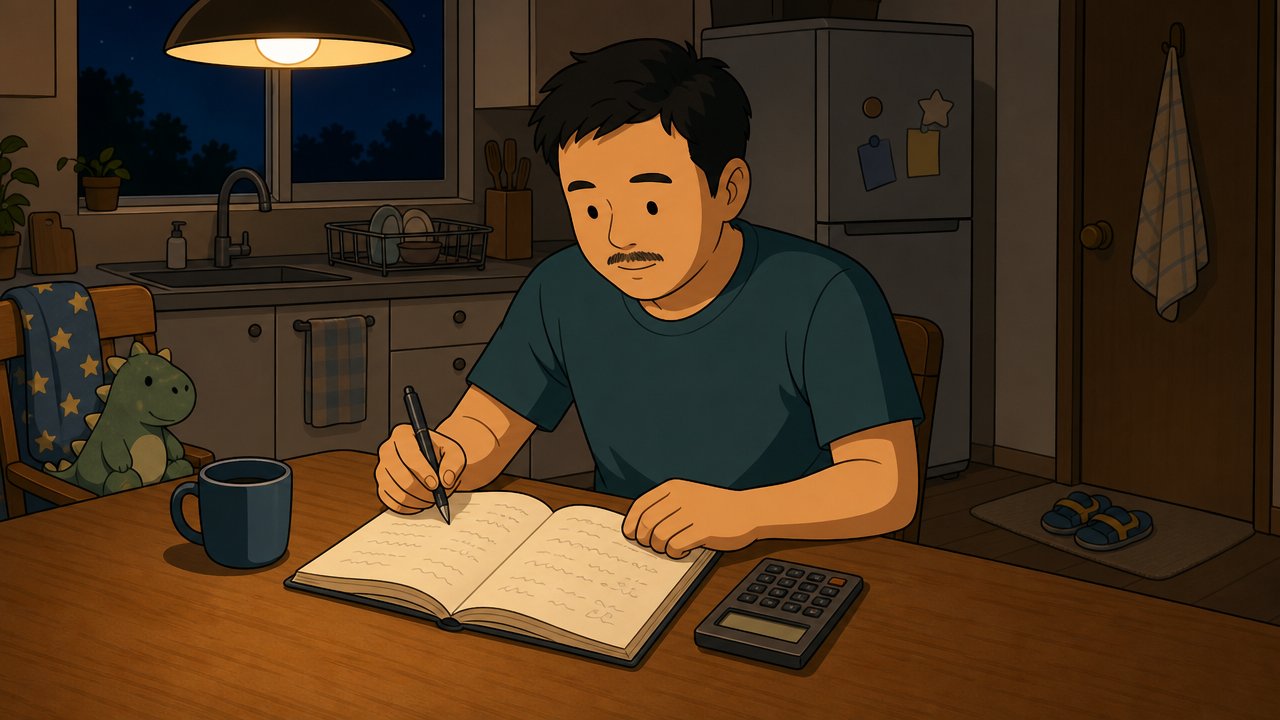
Every man I know has heard the phrase happy wife, happy life. Almost none of us were told what it actually costs.
Last week my wife and I disagreed about something — I don’t even remember what anymore, which tells you something on its own. And I did what I’ve done more times than I’d like to admit: I agreed with her. Out loud, anyway. Inside, I still thought I was right. I said the thing that would end the conversation instead of the thing I actually believed, because ending the conversation felt like winning.
It bought me maybe four hours of quiet. Then the actual disagreement — the one I’d just pretended didn’t exist — was still sitting there, except now it was mine alone to carry, since I’d already told her it wasn’t a problem. That’s the part nobody mentions about happy wife, happy life. It doesn’t feel like peace when you do it. It feels hollow, because you didn’t resolve anything. You just delayed it and called the delay a win.
I’d guess most of the men reading this have done some version of what I did. Buy the gift. Go along with whatever she wants to do for the extra day off. Say “sure, that’s fine” when it isn’t. It’s a good temporary plan. It is not a smart one, and it is definitely not a healthy one — because if you’re honest about who that peace is actually for, it’s not for your marriage. It’s for you. It’s a genuinely selfish move dressed up as a generous one, and the fact that it looks generous from the outside is exactly what makes it easy to keep doing.
Where “Happy Wife, Happy Life” Comes From — and Why It Sticks
Before I take this phrase apart, it deserves something like fair treatment, because it isn’t wrong. It’s just incomplete. A wife who feels unseen, unheard, or constantly deprioritized makes for a heavy house — nobody disputes that, and any man who’s lived in that kind of house for more than a season knows exactly how heavy it gets. Silence at dinner. Politeness that’s really distance wearing a nicer outfit. The phrase survives because it’s pointing at something real, and it’s survived for generations because enough men have watched what happens when they ignore it.
The problem was never the diagnosis. The problem is the prescription — “keep her happy” tells you to treat the symptom and skip the disease. It’s advice that works exactly long enough to convince you it worked.
The Three Ways It Fails You
Peacekeeping isn’t peacemaking. Peacekeeping is what I did last week — managing her mood in the moment so the air in the room feels okay again. Peacemaking is actually resolving whatever’s sitting underneath the disagreement. From the outside, in the first ten minutes, they can look identical. Give it a week and the difference becomes obvious: one of them fixed something. The other just postponed it and hoped you’d both quietly forget it happened. Psychologists have a name for the pattern underneath this — conflict avoidance — and it costs a marriage the same way it costs anything else you keep avoiding instead of fixing.
It makes her responsible for your obedience. If keeping her happy becomes your actual job description, then her bad day quietly becomes your failure report. You start measuring your worth as a husband by her mood on a given Tuesday — which means you start, without ever quite admitting it, resenting her for having feelings she’s entirely entitled to have. That’s not a marriage. That’s a performance review with a ring on it, and nobody signed up to be graded that way, including her.
It slowly removes you from the marriage. A man whose only functional role is mood-management eventually stops bringing opinions to the table. Stops bringing convictions. Stops leading, because leading occasionally requires saying something she doesn’t want to hear in the moment, and he’s traded that away for quiet. He becomes staff. Good staff, maybe — attentive, accommodating, always reading the room. But staff. And no wife actually wants to be married to her own employee, even if she can’t always articulate why the marriage feels thin.
The three compound each other, which is what makes the phrase so hard to spot in the moment. You start by keeping the peace instead of making it. That makes her feelings your responsibility to manage rather than hers to have. And managing someone’s feelings for long enough is, functionally, a job — so you slowly turn into the guy doing it. None of it looks like a mistake from the inside. It looks like love, right up until it doesn’t.
Where I’ve Actually Seen This in My Own Marriage
I’ve caught myself running this exact pattern more times than the story above suggests. It’s not a one-time lapse for me — it’s a default setting I have to actively catch and override, over and over. Buying something instead of having the harder conversation about what’s actually bothering me. Saying yes to a plan I don’t want because saying no feels like starting a fight I don’t have the energy for that day. Smoothing things over with a gift when what was actually needed was for me to just say the true thing out loud.
Every one of those moments felt like peace for about as long as it took to walk out of the room. None of them were. And the cost wasn’t even mine to pay alone — my wife could tell, every time, that something had been swallowed instead of said. She just didn’t always know what, which meant she was left carrying a vague sense that something was off, with no actual conversation to point to and no way to fix a problem I’d told her didn’t exist. I’d essentially made my own discomfort her mystery to solve. That’s not generosity. It’s outsourcing.
The embarrassing part is how long it took me to notice the pattern had a shape at all. For years I just experienced each instance as its own small, isolated decision — this gift, this yes, this swallowed opinion — without ever stepping back far enough to see that they were all the same decision, made on repeat, with the same math underneath it every time: my short-term comfort, purchased with her long-term clarity about where I actually stood.
What Happy Wife, Happy Life Should Actually Say
Here’s the version I’ve landed on, and it took a genuinely different kind of decision to get there — not a bigger performance of agreeableness, but an actual conversation neither of us wanted to have at first. For a few years, my wife and I both tried to manage our finances together — every account, every number, both of us looking at it regularly. It didn’t work, and eventually we both admitted that out loud instead of quietly pretending it did.
My wife gets anxious around money. Not careless — anxious. She doesn’t want the number in front of her. What she actually wants is to be able to ask “can we get coffee this week?” and trust the answer without having to do the math herself. So we changed it. I handle the finances alone now. I control what we spend in a given week, and she doesn’t carry the number in her head at all. She’s not stressed by figures she never has to look at. I’m not stressed wondering whether we’re actually on the same page, because we already had the conversation that put us there — the uncomfortable one, not the easy one.
Getting there wasn’t as clean as that makes it sound. We fought about it more than once before we landed on something that actually worked. Part of the problem was mine, not hers: it’s hard for me to say no to someone I love, and if she could see everything sitting in one account, I knew there’d be moments I’d struggle to hold the line when she asked for something we couldn’t really afford that week. So we built a structure instead of leaning on my willpower. She still has full access to our joint account — nothing’s hidden from her, and she can check the total whenever she wants. But I only keep a set weekly amount sitting in that account at any given time; everything else moves to a separate account she doesn’t check day to day. She’s not shut out of the number. She’s just not staring at a total big enough to make every request feel negotiable, and neither am I.
That arrangement makes her happy. But the happiness was never the thing we were managing for — it’s what fell out the other side of actually knowing her well enough to build something around what she needed, instead of just avoiding whatever she might not like in the moment. That’s the entire difference. A wife who feels known makes for a life worth living. Known survives a bad week. Happy, chased directly and on its own, doesn’t survive much of anything, because it was never sturdy enough to hold real weight in the first place. Happy wife, happy life is true — most of us just have the order backwards.
If you’re figuring out how to get your family running on shared systems instead of one person’s willpower, the same principle scales down to the kids, too — decide it together first, then let the calm follow.
Where This Goes Next
There’s a version of this problem that gets a lot harder, and almost nobody writes about it: what happens when your marriage and your calling share the same building — when there’s no commute, no door between the two roles, and the woman you’re supposed to know is also the person you work beside every single day, in the same rooms, on the same clock. That’s Thursday.