I need to say this clearly, because it would be easy to read the last post and assume the ending: we didn’t move to Cambodia to escape my workaholism. That’s not the story, and I don’t want to tell it that way just because it would tie up neater. As a recovering workaholic writing this now, I can see the shape of both truths at once — the calling that actually brought us here, and the workaholic dad who came along for the ride and had to change anyway.
We moved because we believe God called us here. That’s the plain version. The fuller version starts with Korean church history, of all things — specifically with Horace Grant Underwood, one of the key Western missionaries who came to Korea in the 1880s. Underwood is recorded in Korean history for a reason: his family line didn’t come for one generation and leave. It stayed for four. Four generations of one family, giving their lives to a people that weren’t originally their own.
That challenged something in how we thought about missions. We’d been thinking of it as a calling for a season, maybe a calling for our lifetime at most. Underwood’s family made us ask a different question: what if it’s a calling across generations — not just something we do, but something our children’s children might still be doing, if the Lord tarries? A calling isn’t just handed to one person and then it’s over when that person is. It can be planted, and it can be inherited, the way it clearly was in the Underwood family for four generations straight.
We had a real reason to believe Cambodia was where that could start for us. My in-laws had already been serving there for twenty years. The ground was already broken, relationships already built, trust already earned in ways that take decades, not mission trips. We had the heart to build on that as a second generation — not starting from zero, but picking up something already in motion — loving the people of Cambodia the way Christ has loved us. That’s the whole reason. Not a pace we were running from, but a people and a work we felt called toward, generation after generation, the way the Underwood family showed us it could be done.
So no — workaholism isn’t why we came. But it’s absolutely part of what changed once we got here, because Cambodia does not run on the schedule I brought with me.
When In Rome
Korea moves fast. There’s a word for it — 빨리빨리 (ppalli-ppalli), hurry hurry — and it’s usually the first phrase any foreigner learns there, because it’s not just a word, it’s the whole operating rhythm. Ask for a side dish at a Korean restaurant and it’s at your table in under a minute. Everything runs at that speed, all the time, and if you’re walking instead of moving with purpose, people notice.
Cambodia isn’t that. My ministry here isn’t a typical Korean-church ministry transplanted somewhere hotter — it’s a completely different pace, on purpose, because it has to be. If I show up running at Korea speed, the community I’m actually here to serve can’t catch up, and the whole point of being here is to walk with them, not past them. When in Rome, you move at Rome’s pace. That’s not a compromise. That’s the job.
I didn’t understand that gap until I was living inside it. One time, our group went out to eat, and the food took over an hour to arrive. In Korea, that kind of wait basically doesn’t happen unless you’re feeding a hundred and fifty people at once. Here, it’s just how long it takes. Another time, I wanted to move on a new project with our local leadership. I brought the idea, ready to plan, ready to move. Their answer was: let’s figure things out. It took a full week just to get everyone in a room to start discussing it.
If you’d told workaholic-me in Korea that starting a conversation about a project would take a week, I’d have called that a crisis. Here, it’s Tuesday. And if I insist on running my old pace inside a place that doesn’t run that way, I’m not being diligent — I’m just leaving everyone else behind. It’s like showing up to drive with a group of box cars that top out at eighty miles an hour, except I brought a Lamborghini. The pace difference isn’t a minor inconvenience to route around. It’s the thing that separates you from the very people you came to walk alongside — the same patience it takes to actually meet a toddler mid-tantrum instead of rushing him past it.
What a Recovering Workaholic Had to Learn
I understand exactly why workaholism happens, because I lived inside the version that made sense. It makes you feel valued. It makes you feel like you’re doing everything right, and in certain environments, you genuinely are — the yeses really are correct, one at a time, the way mine were with the funerals. But the environment matters. Who you’re serving and what that service actually requires changes what faithfulness looks like. In Cambodia, faithfulness required something I wasn’t used to giving: patience with a pace I couldn’t control and, eventually, didn’t need to.
It took me a while to down-pace myself. That’s the honest word for it — not a dramatic breakthrough, just a slow unclenching. I’m still learning it. But I’d stop short of calling it a fight or a struggle at this point, because that’s not really what it feels like anymore for this recovering workaholic. It feels more like learning to be flexible in ways I genuinely never had to be before, and finding out that flexibility isn’t the threat to faithfulness I used to assume it was. These days, if something is truly urgent, I still move — I’m the one who knows when that’s true, and I trust myself to know it. Everything else gets to wait its turn, the way everything here waits its turn.
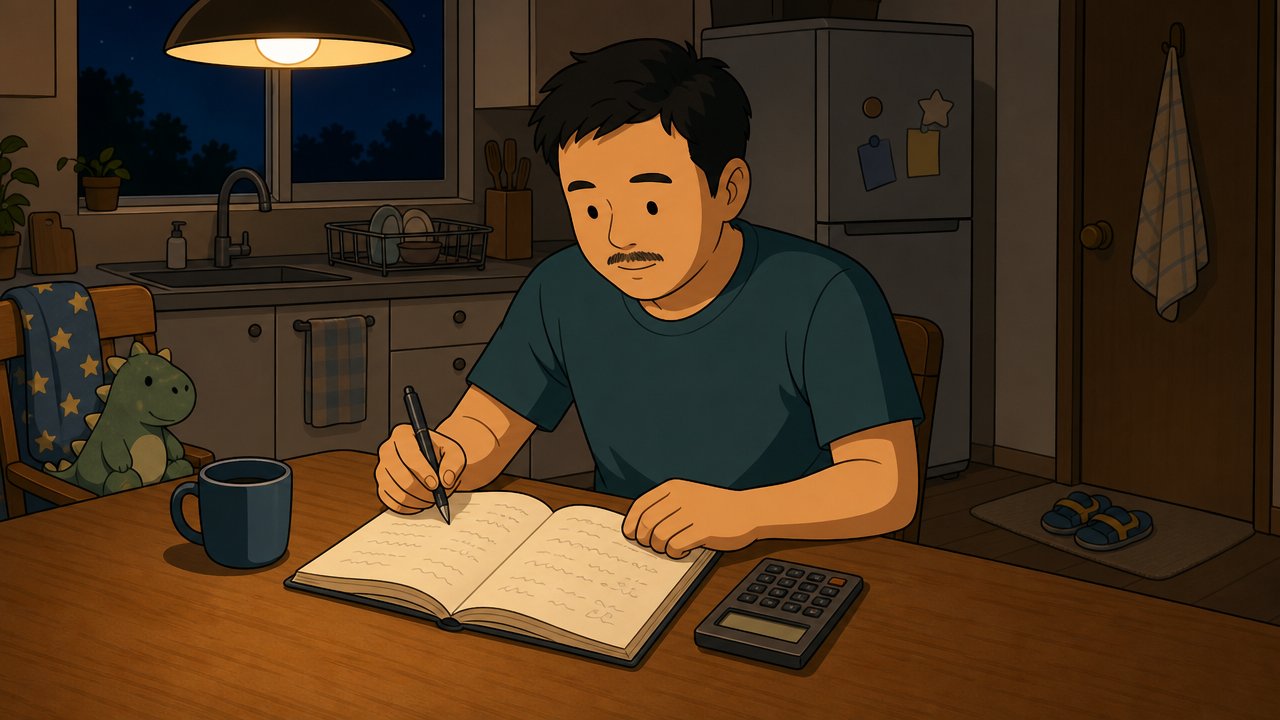
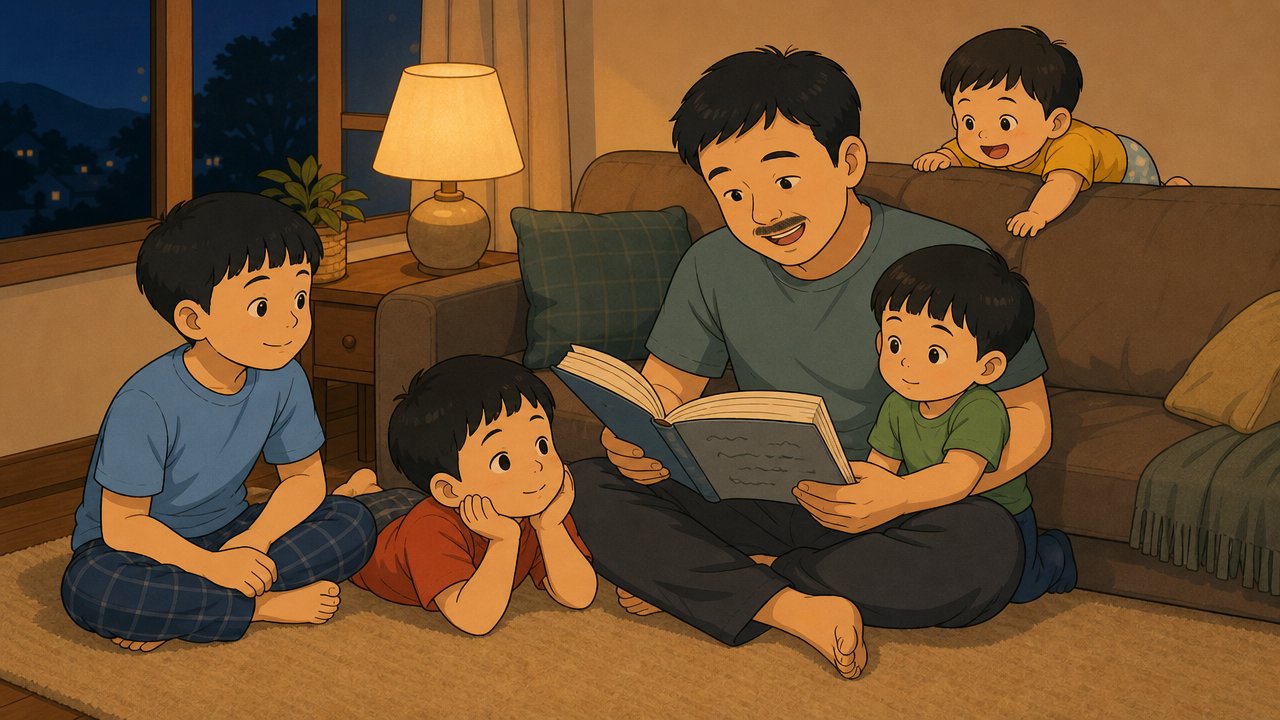
What surprises me most is how much room that’s opened up that has nothing to do with ministry at all. Room for my wife, in ways the Korea schedule never had space for. Room for my kids, not just physically present but actually unhurried with them. Room for fellowship — friends, not just congregation members, just people to sit with and not be needed by. As a recovering workaholic, that’s a strange kind of gain to describe, because none of it shows up on a report of what got accomplished. It’s not a project finished or a sermon delivered. It’s just breathing room, and I didn’t know how much I’d been missing it until I finally had some.
What I Have Now That I Didn’t Have Before
Here’s the part that still catches me, even after all this time: the ordinary, unremarkable rhythm of family life that most dads take for granted — I didn’t have that in Korea. Not really. I have it now.
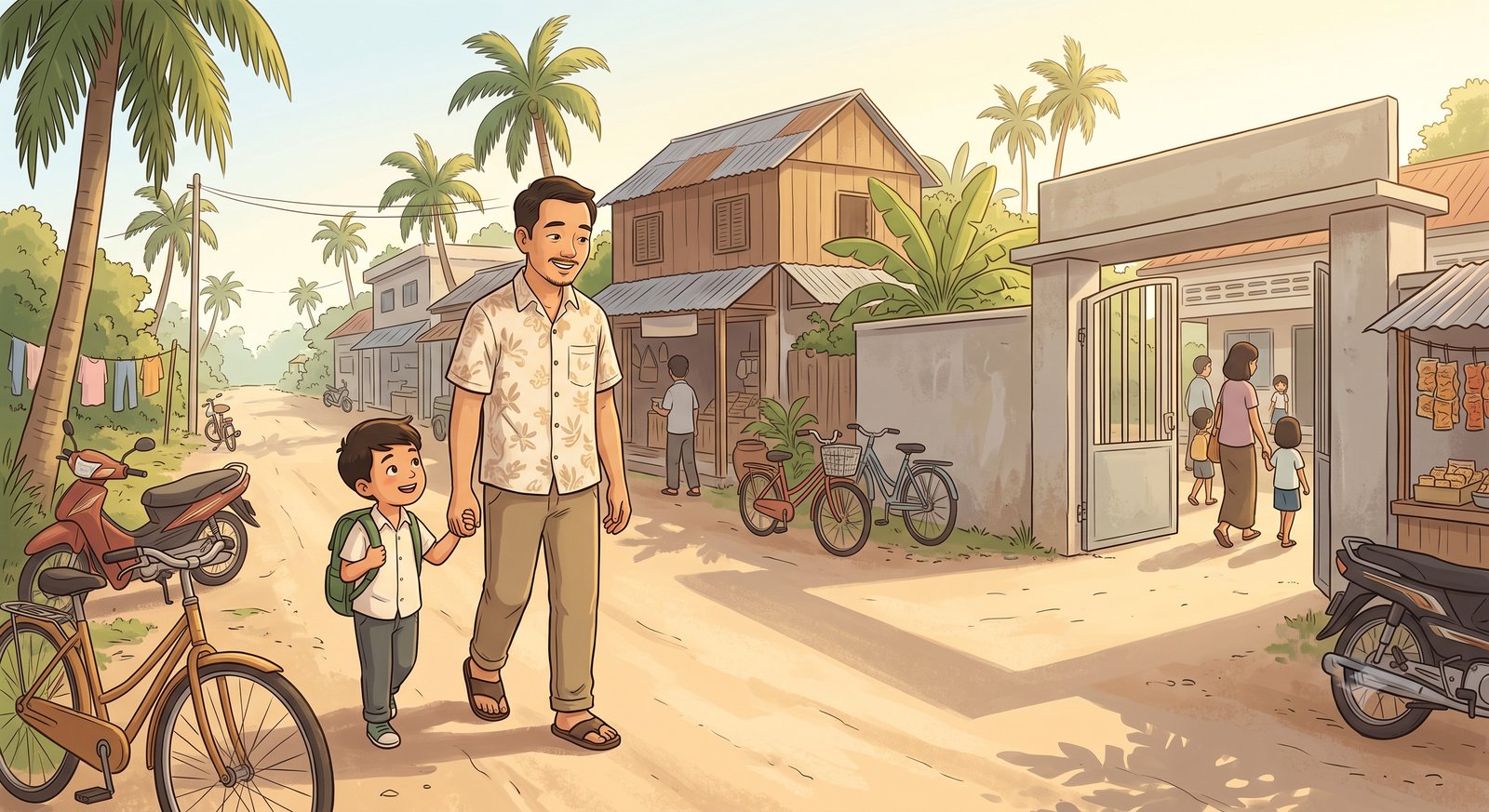
I drop my boys off at school. I pick them up. I’m home for breakfast, for lunch, for dinner, on an actual regular basis — not as something rare enough to notice, but as just what my days are built around now. That’s not a small thing to me. It’s not something I had the privilege of doing consistently until we came here. That same son who once asked my wife if church was my house is now a boy who watches me walk him into school. I don’t take that for granted, because I remember exactly what the alternative looked like, and I lived inside it for years without fully seeing it.
Life in Cambodia is physically tiring in its own ways — heat, logistics, distance from things that used to be easy. I’m not going to pretend otherwise. But I love my life here, with my family, serving the Lord at the pace this place actually calls for. If workaholism was ever going to loosen its grip on me, it was never going to happen through willpower alone. It happened because I landed somewhere that simply wouldn’t let me run the old way anymore — and it turned out that was a gift, not a loss.
If you’re a dad who’s proud of the pace you keep, the way I once was: ask yourself what that pace is actually buying you, and what it might be costing somewhere you’re not looking. You might not need to move across the world to find out. But it might take something just as disruptive to your normal to actually see it.