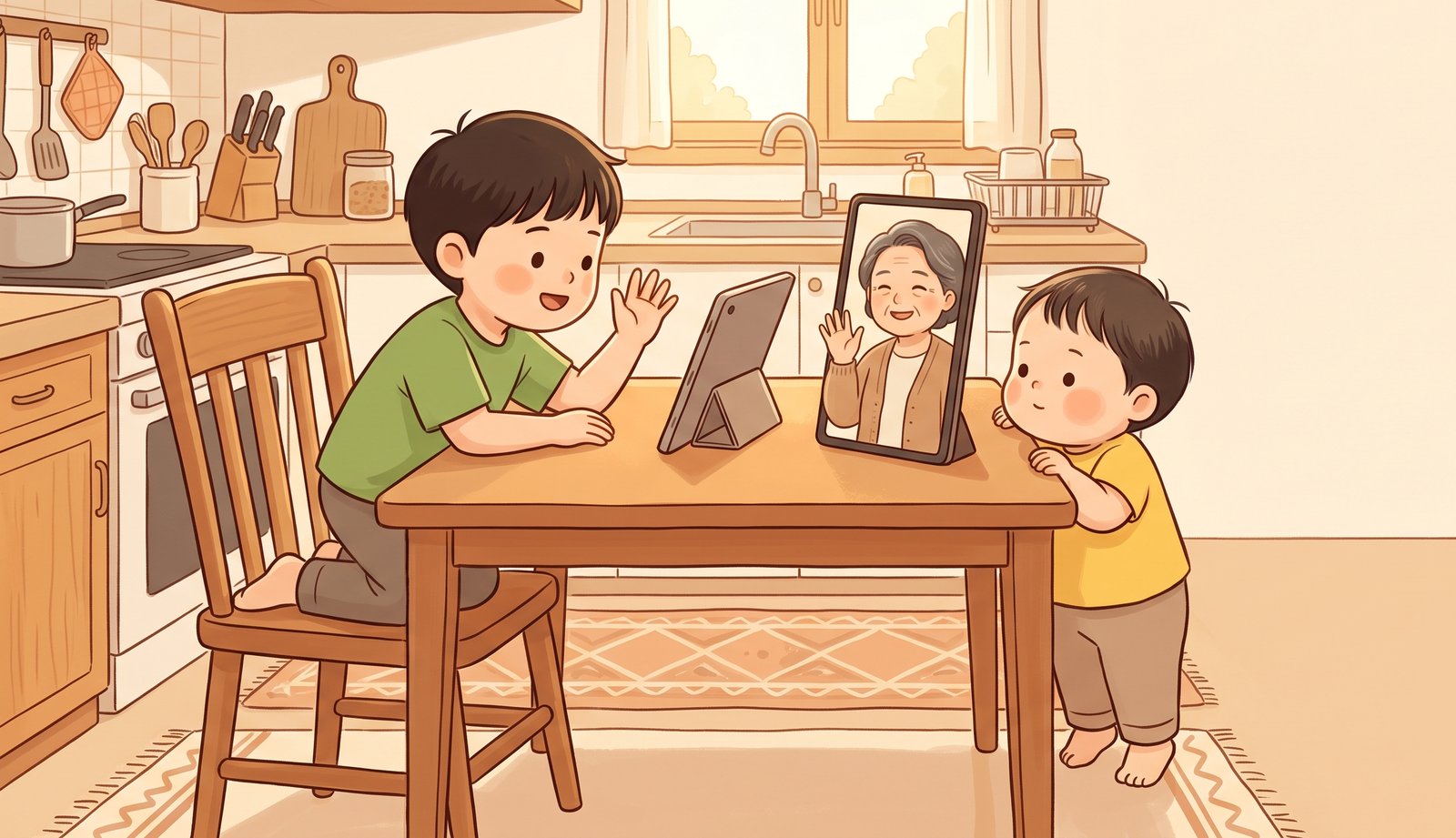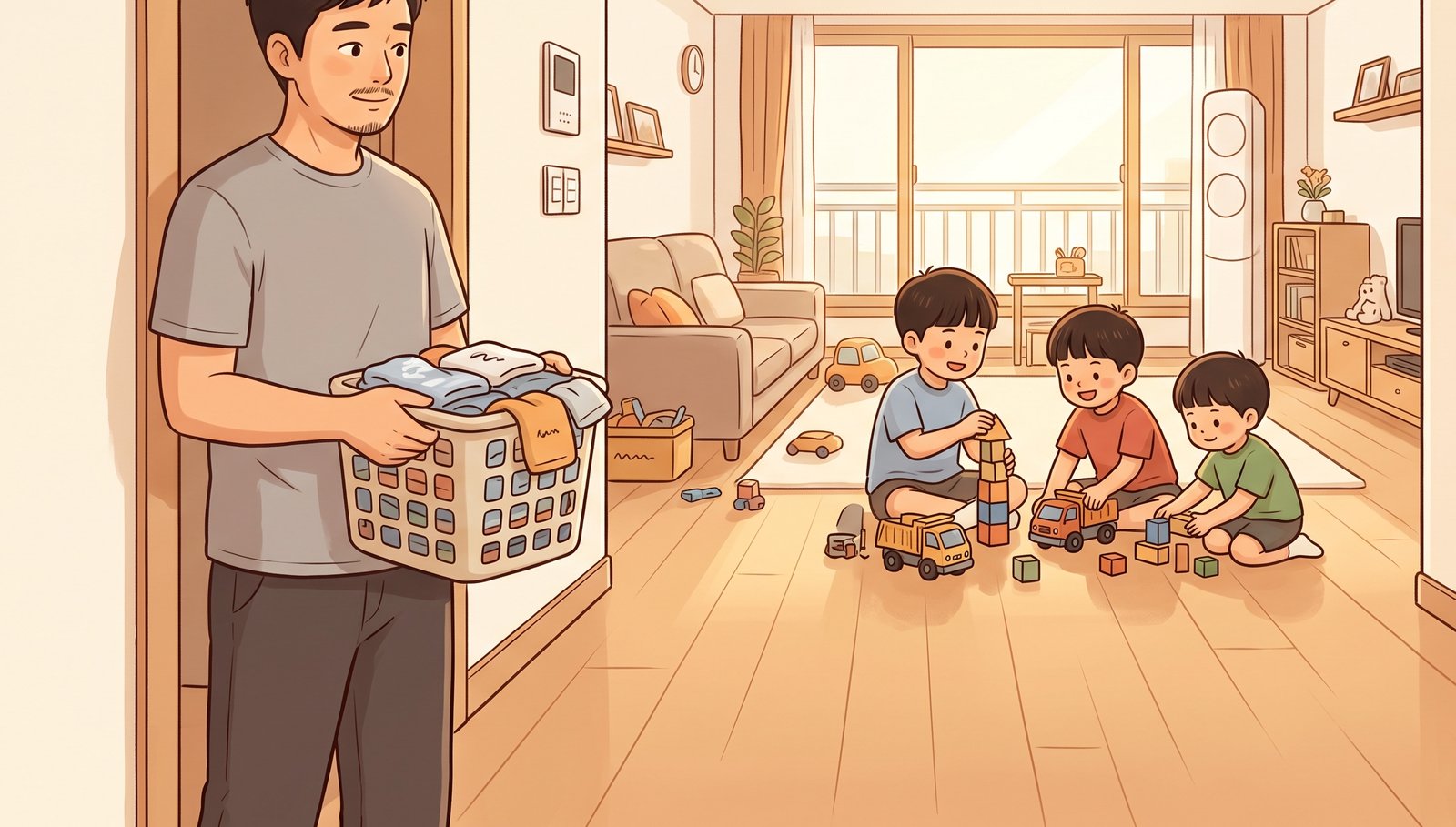
Before we packed thirty-six cardboard boxes and boarded a one-way flight from Incheon to Phnom Penh, I sat our sons down at the kitchen table.
At the time, our house was already vibrating with the particular kind of domestic terror that precedes an international relocation. Packing tape was stuck to the doorframes. The living room rug had been rolled up and shoved into a corner. Number 4 was only one month old, asleep in a portable bassinet in the corner, completely oblivious to the chaos around him, while his three older brothers were debating which plastic dinosaurs had earned diplomatic immunity from the donation bin.
I looked at my wife across the table, took a breath, and started the conversation that every expat, missionary, or corporate parent eventually faces.
The biggest mistake parents make when moving overseas with kids is treating their children like checked baggage.
You pack their socks. You pack their favorite vitamins. You haul them through airport immigration, load them into a minivan on the other side of the planet, and tell yourself they will simply adjust because “kids are resilient.” But resilience without agency isn’t strength; it is just endurance. And endurance under adult coercion turns into quiet resentment faster than most parents realize.
We refused to pack our boys into the luggage. We needed their consent.
The Luggage Fallacy: Compliance Is Not Buy-In
Our boys had an unfair advantage when it came to understanding the vocabulary of our life.
I am a pastor and an appointed missionary. Both sets of their grandparents had served overseas as missionaries, and the boys themselves had been born into a household where church life, prayer letters, and airport goodbyes were normal operating procedure. They already knew what the word missionary meant.
But understanding a definition is not the same thing as agreeing to uproot your life.
It is dangerously easy for well-meaning parents—especially those in ministry, nonprofit work, or high-stakes corporate careers—to use their own sense of purpose as a steamroller. You convince yourself that because your calling is noble, your children’s compliance is guaranteed. You assume that because the destination is meaningful to you, the sacrifice is automatically meaningful to them.
It isn’t. To a six-year-old, God calling his father to Southeast Asia does not automatically compensate for losing his neighborhood bicycle track, his best friend at school, or the specific brand of milk he likes with his cereal.
So when we sat down at that table in Seoul, I didn’t announce a command. I made an invitation.
I told them plainly that God was not just calling Mom and Dad to Cambodia. God was calling all four of the boys—even one-month-old Number 4, who couldn’t hold his own head up yet. I told them that God had a specific surprise waiting for each of them in Battambang—work only they could do, friends only they could meet, and lessons that would teach them how to be truly loving, generous men.
We didn’t pitch it as a permanent sacrifice. We pitched it as a shared mission.
And something shifted in their faces. Number 1, our eldest, sat up a little straighter. Number 2 stopped fidgeting with a stray piece of tape. They liked the idea that they were not cargo being shipped across an ocean by parental mandate, but active partners on a family expedition. They took the lead because they were given the wheel.
The Real Danger of Moving Overseas With Kids as Cargo
When families undergo a major cross-cultural transition, the adult narrative usually dominates the room.
The parents are tracking container shipping deadlines, visa clearances, housing deposits, and international bank wires. You are operating at the redline of your administrative capacity. In the middle of that sheer logistical survival, it is natural to treat child management as a problem of pure compliance: Just put on your shoes, get in the taxi, and stop complaining about the humidity.
Here is the cost of that approach: if a child does not share in the why, they cannot bear the weight of the what.
When an obstacle hits an overseas family—and obstacles will hit you within forty-eight hours of clearing customs—a child who feels dragged along interprets every inconvenience as parental negligence. The broken air conditioner is Dad’s fault. The unfamiliar school lunch is Mom’s fault. The fact that the local language sounds impenetrable is proof that their parents made a terrible mistake with their lives.
When children are brought into the ownership of the move, the arithmetic inverts.
When the power cut out during our second week in Battambang, plunging our rented concrete house into pitch darkness and ninety-six-degree stagnant air, nobody cried mutiny. We lit candles, sat on the tiled floor, and Number 2 declared that surviving a tropical blackout was exactly the kind of adventure we had signed up for.
He wasn’t an expat victim enduring parental ambition. He was a boy on a mission, holding a flashlight in the dark.
The Boys Were Still Boys (My Costed Concession)
Lest you imagine our living room looked like a glossy missionary recruitment brochure, let me undercut the romance immediately.
My sons did not morph into miniature Victorian theologians who spent evenings meditating on divine Providence. They were boys. They were loud, distracted, and deeply territorial about cardboard boxes.
Half the time our grand philosophical discussions about moving overseas with kids devolved within four minutes into Number 2 insisting that geckos were technically miniature velociraptors and asking whether Cambodian lizards could shoot venom into your eyeballs. Number 3 wanted to know with absolute legal precision whether his stuffed bear would have its own seat on the airplane or be forced into the dark belly of the cargo hold. Number 4 was four weeks old, which meant his theological contribution consisted entirely of milk, diapers, and sleeping through packing tape screeching off the dispenser.
And when we landed, the friction was real.
We had tears over unfamiliar toilet plumbing. We had arguments over spicy soup that burned tongues accustomed to mild Korean broth. We had the crushing afternoon where Number 1 realized his new classmates did not speak English or Korean, and the weight of being completely mute on a school playground descended on his six-year-old shoulders.
I wrote before about our struggles with an international school in Cambodia and the painful realization that physical presence does not equal instant belonging. Ownership does not erase pain. What ownership does is give that pain a container so it doesn’t rot into bitterness.
The Daily Debrief: Closing the Emotional Ledger
The single system that preserved our family sanity during our first six months was what my wife and I called the Daily Debrief.
Every single evening, after the dinner plates were in the sink and before bedtime routines began, we gathered. It didn’t require a formal agenda or a thirty-minute devotional. It was ten minutes of unfiltered honesty on the floor.
We asked two non-negotiable questions:
1. What was the hardest thing that happened today?
2. Where did you see God’s surprise today?
The rule of the debrief was simple: complete immunity.
If a boy said, “I hate the dirt road outside our house because the red dust gets in my socks and makes my feet itch,” I was forbidden from correcting him. A defensive parent reflexively responds with moral lecturing: “Be grateful! Think of all the children who don’t have socks!”
That is how you teach your children to lie to you.
When your kid tells you the dust is miserable, you look him in the eye and say: “Yeah. The red dust is everywhere. It gets in my sandals too, and it drives me crazy. It is completely okay to hate the dust.”
Validating the friction takes the venom out of it. When a child sees that his father isn’t terrified of the difficulty, the child stops being terrified of it too. We closed the emotional ledger every night so no unpaid grievances carried over into breakfast.
Two Years Later: When Cambodia Became Home
More than two years have passed since we loaded those thirty-six boxes onto the truck in Seoul.
Our sons have grown through three shoe sizes each. Number 4, who made the flight as a one-month-old bundle in my wife’s arms, is now a running, climbing two-year-old who treats the living room furniture like an obstacle course. The silver 2012 Sienna in our driveway has accumulated a permanent patina of Battambang red dust in its wheel wells. We have lived through Dengue fever scares, currency swings from living on missionary support, and monsoon downpours that turned our alley into an ankle-deep brown river.
And a few weeks ago, something quiet happened that made me stop in the kitchen doorway.
We were talking about our upcoming trip to Korea to visit their grandparents. In the past, Korea was “home” and Cambodia was “the place we went.”
Number 3 was sitting at the table, swinging his legs, and asked: “Dad, how many days will we be in Korea before we go back home?”
I didn’t answer right away. “Which house is home?” I asked casually.
He looked at me like I had asked whether water was wet. “Battambang,” he said, turning back to his drawing. “Our beds are here. Tori is here. Our books are here.”
The boy who had cried over unfamiliar soup two years ago had red dirt under his fingernails and Cambodia in his bones.
He didn’t get there because his mother and I dragged him across an international border and demanded his gratitude. He got there because he had walked through the front door on his own two feet, carrying his own little backpack, knowing he had chosen to be here just as much as we had.
The Rule for Any Family at a Crossroad
This is not a principle exclusive to foreign missions or international moves.
It applies to moving across town. It applies to switching careers, starting a new business, downshifting your household budget, or moving an aging grandparent into your guest bedroom.
Parents routinely make executive life decisions in secret, seal the paperwork, and present the finished verdict to their spouse and children as an accomplished fact. Then they act bewildered when the family rebels against the transition.
You cannot demand emotional investment in an enterprise where you refused to grant emotional shares.
If you are leading a family into a major disruption, sit them at the table while the boxes are still empty. Tell your spouse the full truth about the risks, and tell your children why their specific presence is required for the team to succeed.
Don’t promise them that moving overseas with kids will be seamless, because real life is never seamless. Promise them that whatever breaks along the way, you will talk about it together before the lights go out.
Give them the dignity of the invitation. You might be surprised at how far small legs can walk when they know they are leading the way.