The egg recipes are the easy part of my kitchen. Kids are forgiving — give them something yellow and warm and they’re in. My wife has been a different project entirely, and after ten years of marriage, I think I’ve finally cracked a homemade tomato soup recipe that actually won her over — paired with a batch of baguettes made at midnight, which turned out to be just as important.
She’s picky in her own way — sometimes as picky as our four boys, honestly, just about different things. Feeding the kids is a numbers game: enough repetition, enough consistency, and they fall in line. Feeding my wife has never worked like that. It’s been slower, and it’s taught me more about actually cooking than any of the systems I’ve built for the boys.
A Marriage of Two Very Different Kitchens
My wife grew up in a dormitory. She never had to cook — not once, not out of laziness, just circumstance. I grew up the opposite way, cooking my first (bad) fried rice at 11 years old and never really stopping. My actual cooking skills, though, didn’t grow exponentially until after we got married. She was the challenge that made me better. Living with someone whose standards were completely different from mine forced me to actually learn instead of just repeat what I already knew.
Pasta was the first fight. I grew up eating pasta in Vienna, Austria, so al dente isn’t a preference for me — it’s the only standard I know, the texture pasta is supposed to have. My wife grew up in Korea, where a lot of local restaurant pasta is cooked soft, closer to the “oven spaghetti” pizza places give out with a pizza order than anything close to al dente. That was her standard, and it wasn’t going to become mine, and it wasn’t going to become hers either just because I said so, or because I happened to think my version was more correct.
So I make her pasta soft, the way she actually likes it. My own midnight pasta, when I’m cooking just for me, is still al dente, texture intact, exactly how I learned it as a kid. Same kitchen, two standards, and I’ve made peace with running both — one for her, one for me, and neither of us has to pretend the other is wrong.
New Means Terror
Pasta texture was a negotiation. New food entirely is a different problem. My wife isn’t a fan of new — in her head, and I think it runs in her family, new basically registers as terror and abomination before it’s ever registered as food. I’ve made this family try a lot of new things over the years. I win some of those and lose most of them, and I’ve made peace with that ratio too.
I should say clearly: I never tried to make her eat what I eat. I genuinely love trying local food — since we’ve lived in Southeast Asia, I’ve had alligator, fried frogs, fried crickets, deep-fried scorpions, flower soup, all real Khmer and Southeast Asian dishes I sought out on purpose because I love the challenge of a new cuisine. That’s just who I am at a dinner table. Put something unfamiliar in front of me and I want to know what it tastes like. None of that was ever a project I put on her, though. I never once tried to drag her to the exotic end of the menu with me. She had her own list of things she was willing to try, at her own pace, and tomato soup, of all things, ended up on it.
The Homemade Tomato Soup Recipe That Broke Through
She had her doubts about the tomato soup before she’d even tasted it. She didn’t want to try it, plain and simple — no real reason beyond it being unfamiliar, which for her has always been reason enough on its own. I didn’t push hard. I just kept making it for myself and the boys often enough that it stopped being a strange, foreign thing sitting on the table and started being just another Tuesday option, something she could try on her own timeline instead of mine.
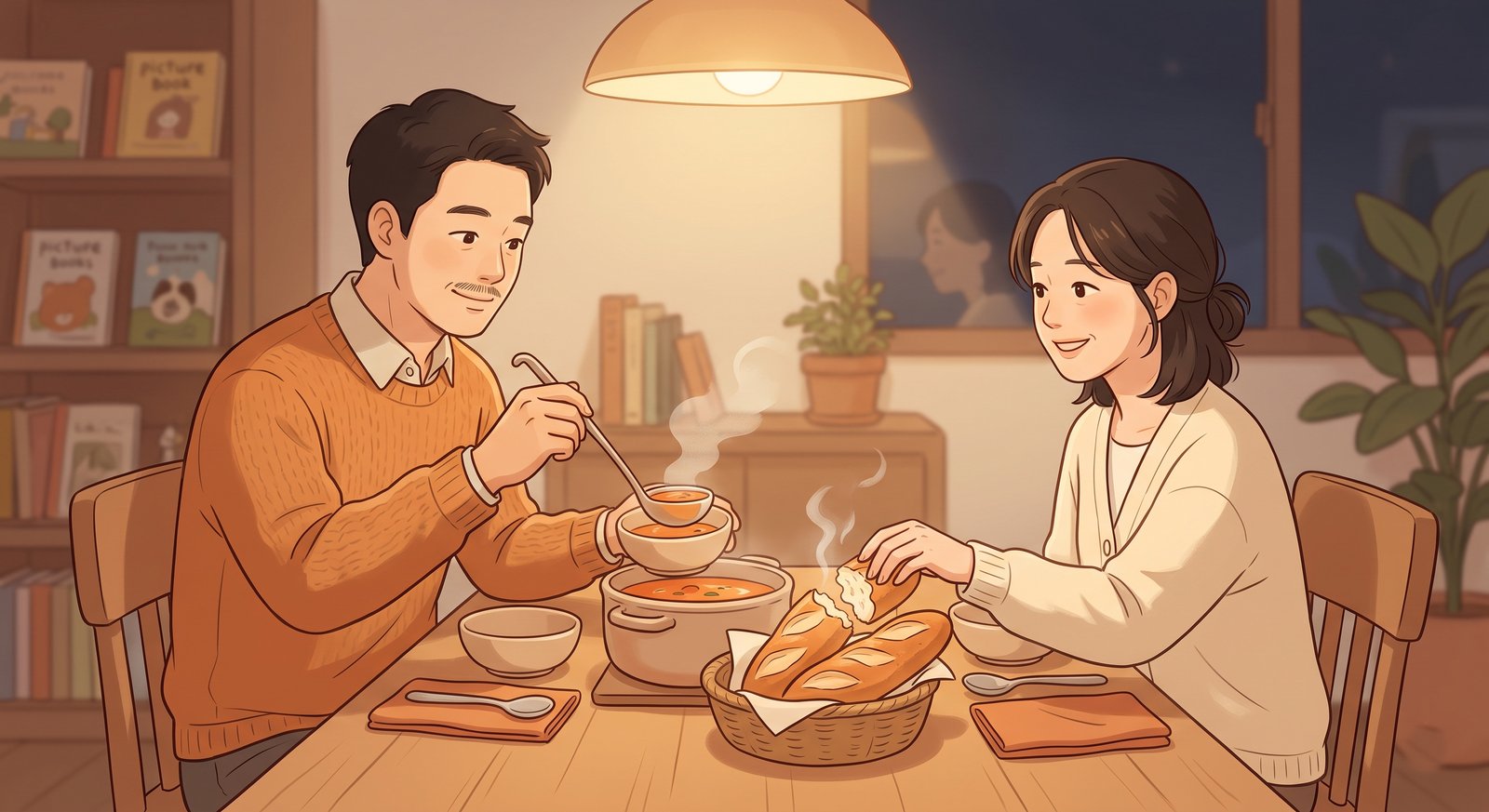
But now, whenever we get good tomatoes, she’s the one asking for the soup — and specifically asking for it with homemade baguettes on the side. That combination has become one of our household’s real favorites, hers included, which for a woman who treats “new” as a threat is no small thing.
Here’s exactly how I make both.
The Tomato Soup
Boil four large tomatoes whole. While that’s going, mince garlic and onion — four onions to match the four tomatoes, which sounds like a lot and is a lot, but it’s what gives the soup its depth — and stir-fry them in an oiled pot. In a separate pan, make a roux with about 60g of butter and 1/2 cup of flour, then mix that into the pot with the garlic and onion.
Once the tomatoes are cooked through, pull them out, peel them, and add them to the pot, mashing them in as best you can. Keep about two cups of the tomato stock aside as you do this. Add that stock back into the pot along with an equal amount of cream, and let it come to a boil.
Once it’s boiling, take a hand mixer directly to the pot and grind down the tomato, garlic, and onion right there until it’s smooth. Let it simmer down from there — this is where the soup develops its deep, sweet flavor from the tomato and all that onion working together. Season it once it’s done, and that’s the soup.
One thing I’ve learned: it’s better the next day, reheated. Every soup and stew is. I can’t fully explain why. Just trust me on it.
The Baguettes
This one’s simpler than it sounds, and honestly more about ratio and feel than precise baking-science measurement. I usually work with 300g of flour per tray, so at a 3:2 ratio that’s 300g flour to 200g water. Mix those in a bowl and let it rest for 20 minutes before adding 1 teaspoon of salt and about half a teaspoon of yeast, then mix it well.
Let it rest for a first proof of one hour, then fold it several times and let it rest for a second hour. After that, pull it out, cut it into three equal pieces, and place them in a baguette tray for a final 20-minute rest. While that last rest is happening, preheat the oven to 185°C (365°F).
Score each piece diagonally before it goes in, then bake for 20 minutes. That gives you three small baguettes — exactly right alongside a pot of the soup above.
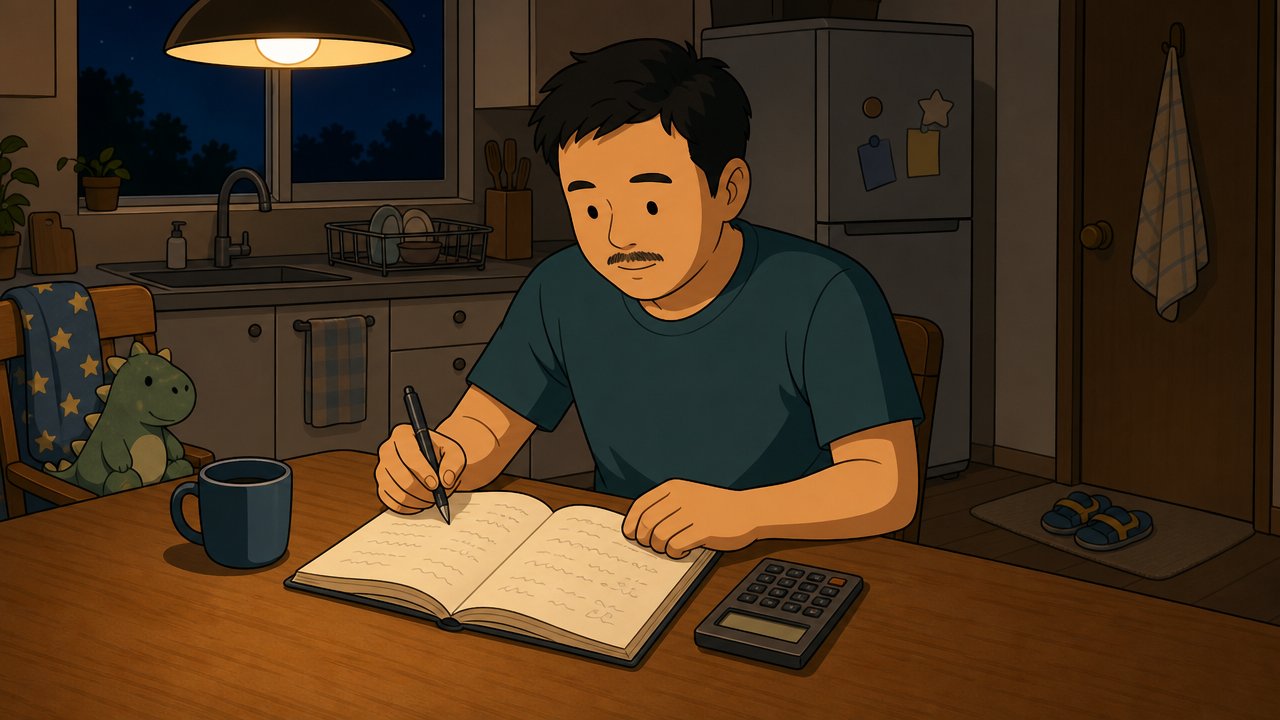
I do this one at night, after everyone’s asleep — a small kitchen ritual that belongs entirely to me, in a house that otherwise runs on four boys’ schedules all day long. A baguette’s actual shape and crust are more specifically defined than people realize — French law even regulates what can legally be called one — and getting the timing and oven temperature right takes real attention. Doing it at midnight isn’t about the romance of it. It’s that nobody’s calling me away from the dough at exactly the moment it matters.
Still Working On It
Ten years in, I don’t think “winning her over” is ever really finished — it’s more like a slow accumulation of small yeses, the same way most of what actually works in our marriage has been. The tomato soup was one yes. The baguettes were what made it a habit instead of a one-time thing. I don’t know what the next one will be. But I’ve learned not to stop offering.
I think that’s the real difference between cooking for the boys and cooking for her. With the kids, the system is the point — build the routine once, and it runs itself, meal after meal, without much thinking required. With my wife, there’s no version of that. Every new dish is its own negotiation, and I don’t think that ever fully changes, even after a decade. I used to find that frustrating. Now I think it’s just what it looks like to actually know someone — you don’t get to automate a person the way you automate a Tuesday dinner, and I wouldn’t actually want to. The soup being better the second day isn’t the only thing in our kitchen that takes patience to get right.