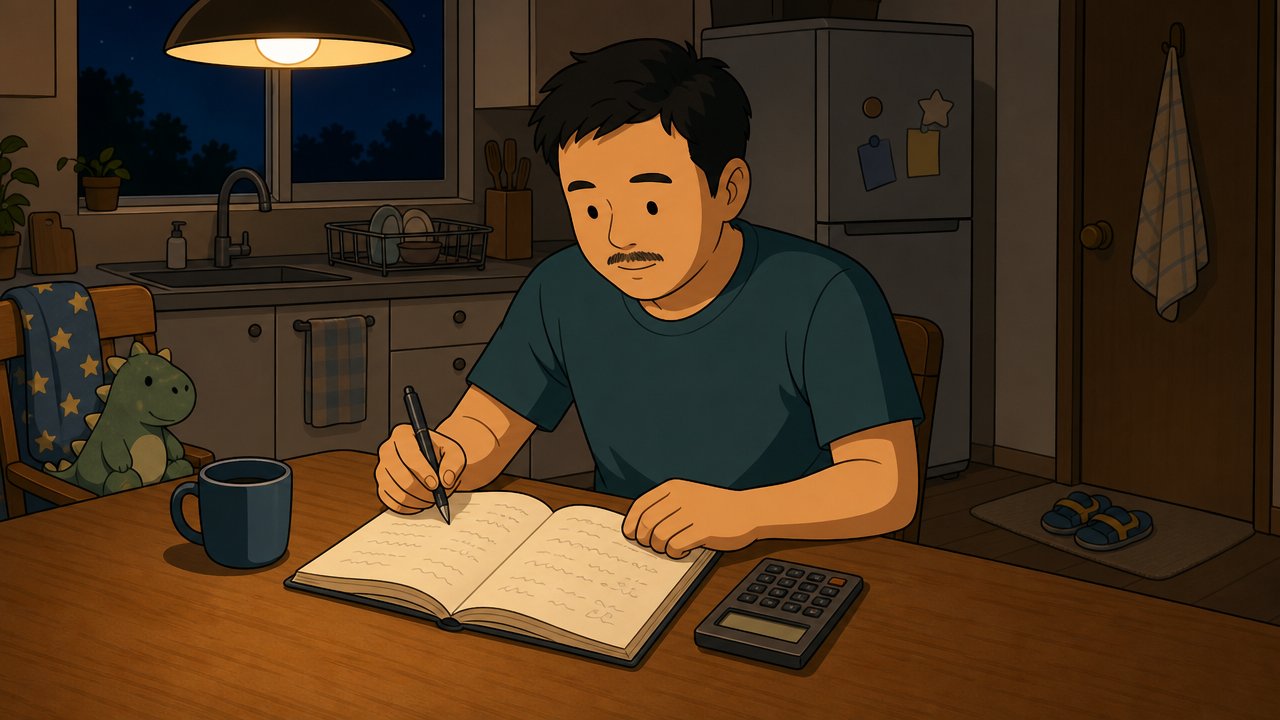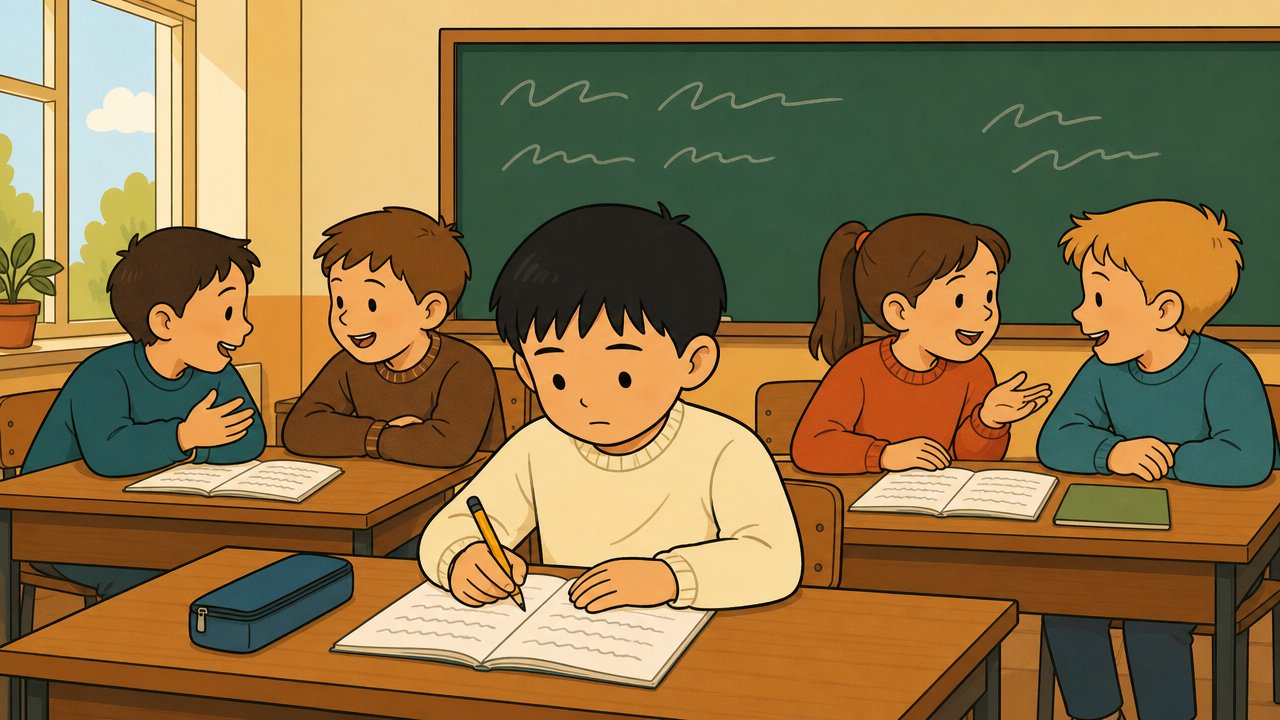
I repeated kindergarten. Not because of anything anyone would put in a file — I was six, we had just landed in Uzbekistan, and by the end of that first year it was obvious I didn’t have enough language under me to sit in Grade 1. So I did kindergarten again. That was the whole diagnosis. Not slow, not struggling, just short a language.
That is the first thing I remember about learning the local language, and it should have been the last word on the subject. It wasn’t. Ten years later I left Uzbekistan at sixteen with a Russian accent people still compliment and a Russian vocabulary that runs out the moment a conversation gets interesting.
I’ve been trying to work out how both of those are true at once, because my sons are about to be handed the same problem in a different country, and I’d rather they didn’t get my version of the answer.
Learning the Local Language Is Not the Same as Living in It
Six to sixteen. A decade in one place, in the nineties, a few years after the Soviet Union came apart, when Russian was still what everybody actually spoke. Not a semester abroad. Not a gap year. The whole shape of my childhood happened in that language, and I still can’t sit down with a Russian friend and talk about anything that matters.
People hear the arithmetic and assume something went wrong — bad schooling, isolation, some expat bubble with a wall around it. None of that is what happened. I wasn’t sealed off. I had the years, I had the street, I had the exposure everybody says is the thing you need.
What I had instead of fluency was a way out.
The Escape Hatch Was Korean
My parents taught Korean. That was a real part of what they did, and it worked — the young men and women who came through their classes ended up speaking decent Korean. Which meant that the people I spent the most time around had two languages available to them, and so did I.
So conversations went like this. We’d start in Russian. They’d try, I’d try, both of us reaching. And then somewhere in the middle it would get too hard, and we’d switch to Korean, and the conversation would keep going.
Nothing broke. Nothing failed. I never once stood in a room and could not communicate. Every conversation I ever needed to have, I had.
That’s the whole reason I never learned Russian properly. Not that it was too hard — that it was never necessary. There was always a floor under me, and I never fell far enough to find out what learning actually costs.
I didn’t start formally studying Russian until seventh grade. Six years in, with a decade’s head start already half spent — six years of learning the local language by accident and none of it on purpose. Before that it was pure survival linguistics: enough to buy things, enough to be polite, enough to get through the parts of a day that don’t require you to say anything complicated. It was sufficient. Sufficient is a trap.
My Accent Is the Best Thing About My Russian
Here’s the strange inheritance of learning a language by ear as a child instead of studying it as a student: the sound is perfect and the substance isn’t.
My pronunciation is nearly local. On the phone, people don’t hear a foreigner. I can do a Russian accent well enough to make friends laugh. Everything about the surface of my Russian says fluent.
And then people answer me the way you answer a native speaker — fast, half-swallowed, no accommodation — because why would they slow down for someone who sounds like that?
My Russian sounds good. My hearing doesn’t.
I can get around. I can be polite. I can handle a transaction and be pleasant at a table and give the impression, for about ninety seconds, of a man at ease in two languages. What I have never once been able to do is have a conversation with any depth in it. Not a real disagreement, not a long story, not the kind of talk where somebody tells you something true about their life.
That’s the gap. It does not close on its own. It has not closed in twenty years.
The Clinic Where I Was Useful
The summer after my freshman year of college, back in Korea, I volunteered a few hours at the International Clinic at Seoul National University Hospital. It’s the wing for foreign patients — a VIP setup, in practice, for people who had flown a long way and could pay for the privilege of being understood. Wealthy patients from everywhere. Arab families, Indian families, Americans, Russians.
I translated for most of them. That was the job and I was decent at it.
Russian was the hardest one, and the reason is worth saying precisely, because it’s the whole diagnosis: with the Russian patients I was doing half the conversation in English and half in Russian. Not translating between two languages. Patching between three, using English to carry whatever my Russian dropped.
Nobody in that room would have said I was failing. The patients got what they needed. It worked.
It worked the same way it had always worked, which is exactly the problem.
The Nurse Who Told Me to Go
There was a nurse there who spoke fluent Russian. He was 고려인 (kor-yo-in) — Koryo-saram, from the Korean families who moved north into Russia under Japanese rule and ended up scattered across the Soviet Union, generations deep, a long way from where they started.
He loved my pronunciation. He kept coming back to it. And then he told me what everybody who hears my accent eventually tells me: go to Russia. One year, maybe two. That’s all it would take. You’d come back fluent, and with fluent Russian you could do all kinds of things right here.
He wasn’t being polite. He was a man who knew exactly what a language is worth to a family, and he was handing me a specific instruction with a specific timeline.
I knew what the hospital paid. It was good money. It just wasn’t a life I wanted, and underneath that was something smaller and worse:
I thought I was satisfied with the level I had.
I said no to one to two years, at an age when I had them to spend, because the version of Russian I already owned had never once let me down badly enough to make me want more.
I’ve thought about that conversation more in the last five years than I did in the ten before it.
What It Actually Cost
Not a career. I’m not writing this from inside some alternate life where I became a translator and got rich. That’s not the loss.
The loss is that there are people I have known and liked whom I have never actually talked to. I stopped at pleasant with them. I have been a nice, funny, easy man with a good accent in Russian, and I have never been a friend in it, because friendship happens past the point where my Russian stops.
My mother still speaks Russian to me on the phone so I don’t lose the rest of it. She and my father are in Ukraine, still doing the work, and she is quietly running a rescue operation on the last of her son’s second language, one call at a time.
I don’t blame my parents for a second of this. They put me in the best school we could have hoped for and one they could actually afford, with American and British missionary teachers, in a country where the alternative was a local school my parents pulled us out of once they saw what was in it. They made the right call with what was in front of them. The gap isn’t a thing they did to me. It’s a thing I didn’t do, for ten years, because I never had to.
Why My Sons Are Changing Schools
This is the part I actually sat down to write.
We’re moving our boys out of their English-medium school and into a Khmer one. It costs the same, it isn’t a step up in prestige, and it’s going to be hard on them for a while. Number 1 is going to want the whole plan explained before he can sleep.
I’ve given a few reasons for that decision and they’re all true. Here’s the one underneath them.
What stops a child from learning the local language isn’t difficulty. It’s an exit. If a child can always fall back into a language that works, they will, every single time, because there’s no reason on earth not to — and the falling back feels like nothing. It doesn’t feel like a decision. It feels like the conversation continuing.
My exit was Korean. My sons’ exit is English, and it’s a much wider door than mine ever was, because English will get you further in the world than Korean got me in Tashkent. Right now they can be at that school all day and go home having spoken almost no Khmer, and nothing will have gone wrong, and that is precisely the condition that produced me.
I’m not making them learn Khmer. I’m removing the way out. Those are different projects and only one of them works.
And I should say plainly that I don’t know if it lands. I’m doing this partly on the strength of my own regret, which is not the same thing as evidence, and there’s a version of this where I put three boys through a hard year and end up with kids who have functional Khmer and resent how they got it. I’ve weighed that. I still think the exit is the thing that has to go. But I’m not going to pretend I’m operating from anything sturdier than a strong hunch and a twenty-year-old mistake.
The other thing I want for them is the part I can’t engineer, which is the friendship on the far side of the language — the same reason their English is a fight worth having and not just a school subject. I want them to be able to have a real conversation with someone whose whole life is in Khmer. Not order food in it. Not be charming in it for ninety seconds. Actually know somebody.
The Kindergarten Year, Again
I keep coming back to that first year, because everyone in it was right.
The school was right that I wasn’t ready. My parents were right to let them hold me back. Six-year-old me was right that it was unfair, in the way six-year-olds are right about things.
And then the system did its job, I caught up enough to sit in Grade 1, and the caught-up-enough held for the next ten years, and nobody ever made me go past it. That’s the year that actually decided this. Not the one where I was held back — the one right after, where I got to just-enough and discovered that just-enough is a place you’re allowed to stay.
My boys are going to have their own version of that year. It’s coming, and it’s going to be rough, and I’m the one signing them up for it.
Learning the local language is going to cost them a year of being the slow kid in the room. I’d just rather they get stuck on the hard side of it than the easy side. I’ve seen how long you can live on the easy side. Twenty years, and my mother still calls in Russian.