Teaching kids to speak English at home sounds like it should be the easy part of my story. English is my mother tongue now — I’ll say that plainly, even though it isn’t the language I was born into. I grew up Korean, and when my family moved to Uzbekistan, my two brothers and I didn’t speak a word of English between us. I started learning at six. Somewhere in the years after that, English quietly became the language I think in, joke in, and dream in. I speak it better than I speak Korean today — ask my wife, she’s the first to remind me of my limits in her language, not mine.
Here’s the part I don’t lead with, because it sounds like bragging and isn’t meant to be: I’m actually quadrilingual. English with my brothers. Korean with my parents. German with cousins in Austria. Russian with the friends and church members I grew up around in Uzbekistan. That sounds impressive until you’re the one carrying it. These days my mind mixes German and Russian without asking me first, and lately Khmer keeps sneaking into the blend too. Holding four languages at once isn’t a party trick. It’s a cost, and I pay it daily. So when it came to my own boys, I assumed the hard part was already solved — I’d done it myself, more than once. Surely they’d manage one more language, with a fluent parent right in the house.
I was wrong. Teaching kids to speak English at home turned out to be a completely different job than learning it myself ever was.
What I Actually Expected
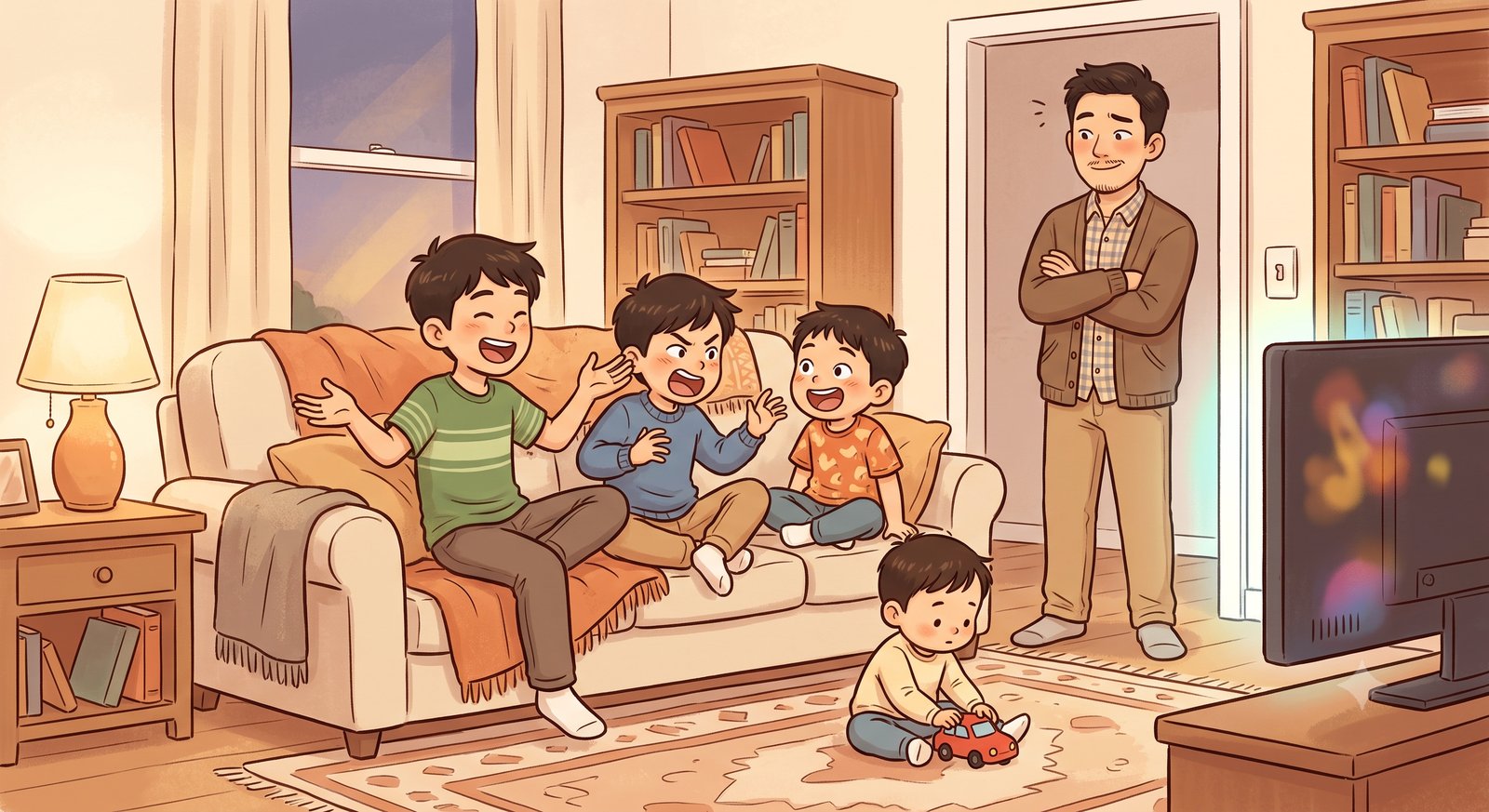
Our boys spent over four years living in Korea before we moved to Cambodia. For most of that stretch, Korean was the only language in the room — school, friends, TV, everything. There was no daily reason to reach for anything else, so nothing else took root. We’ve been in Battambang for about a year now. School is entirely in English. Khmer is what they pick up from friends and at church — they know the basics now, numbers, simple words, enough to get by, but real conversation in Khmer is still a step away. And Korean is still what runs the house. They play in it, talk in it, argue in it — loudly, and often. English is a subject they pass at school, not a language they live in once they’re home.
Teaching Kids to Speak English at Home, and Why We Made It First
Our original plan was Korean first, Khmer second, English third — Korean for who they are, Khmer for where they live, English last. Then we noticed something in Battambang: a lot of the local families we know, especially middle and upper class ones, quietly prioritize English over Khmer for their own kids. It made sense once we sat with it. Higher education, better careers — English is close to a requirement for both. We agreed with that logic enough to change our own order. Pushing English first was my call, specifically, because I’m the one in the house who actually speaks it. I can’t pretend English doesn’t carry more weight and more doors than most other languages right now. If our boys were going to be sharp — the kind of kids who could stand out, not just get by — I wanted English to be the language they had first, not last.
My wife complicates this more than people expect. She grew up in Cambodia, so her Khmer is close to fluent, just rusty after years in Korea. Her English is genuinely decent — good enough to hold a real conversation. But she still finds it awkward to actually speak English to our own boys. It doesn’t come naturally as a parent-child language for her, even though she can use it fine elsewhere. So the one adult in the house with real, native-level Khmer speaks Korean and Khmer with the boys, not English — which means the “English environment” I was counting on was never as built-in as I assumed.
What I Actually Tried
I didn’t just wait around, either. I ran through a real list:
- Morning English-only rule. Whoever spoke first at breakfast had to speak English. Lasted about four days before Korean quietly took back over.
- Research. I went looking for actual methods to teach English to my three school-age boys. I’ll be honest — I’m not a language teacher, and it showed. Nothing I found translated into anything that stuck.
- The reward system. Whichever kid used the most English during the day got some kind of small prize. It turned into a competition about the prize, not the language.
- English-only screen time. This felt like the one that should’ve worked, closest in spirit to the screen time rules that actually work for everything else in this house. It didn’t work here — not the way I expected.
- A private English tutor. We actually looked into this seriously. It’s genuinely hard to find one in Battambang, or really anywhere outside Phnom Penh. We specifically wanted someone without a strong Khmer-accented pronunciation pattern — not because Khmer speakers can’t teach English well, plenty do, but because Khmer phonics shape pronunciation in ways that are hard to unlearn later, and we wanted our boys hearing a specific model early. We never found the right fit.
The Disney Workaround They Found Instead
Here’s what actually happened when I switched all their screen time to English: they put on a Pixar or Disney movie they’d already watched a dozen times in Korean, and instead of listening to the English, they narrated the Korean dialogue to each other from memory, scene by scene, while the English played in the background. They weren’t ignoring the movie — they knew exactly what was happening on screen. They just weren’t hearing it in English anymore. Maybe that’s doing something for comprehension underneath the surface. I genuinely don’t know. But it is nowhere close to a conversation, and a conversation was the whole point.
The Real Reason, I Think
After all the rules and systems failed one by one, I landed on something simpler and harder to fix: our boys don’t feel like they need English. They’re a tribe of four. They have each other, in Korean, all day, every day. There’s no friction in their world that a new language would solve — no barrier they run into with each other that makes reaching for English feel necessary. Kids learn survival vocabulary fast because survival is real pressure. Ours get exactly enough English to get through a school day, and then they go home to a world where Korean already covers everything that matters to them. Without that pressure, motivation just isn’t there, no matter how many rules I put around it.
What My Mom Did That I Forgot
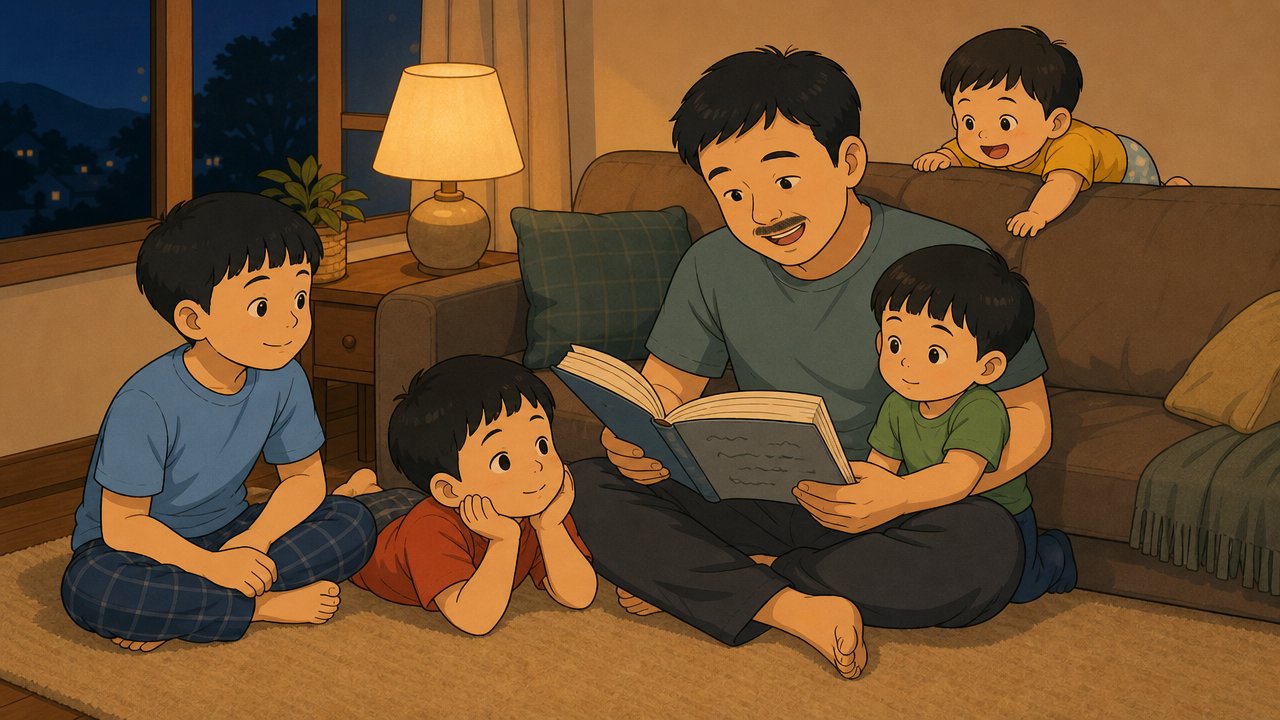
Somewhere in the middle of all this frustration — me talking to my boys in English, getting a blank “uhm…” and a retreat back into Korean — a memory came back to me that I hadn’t thought about in years. My mom taught my brothers and me to read English using a whiteboard. She wasn’t fluent herself. Her English was more limited than what I’m dealing with in reverse now. But she sat us down, board and marker, and made it happen anyway, without any of us feeling the daily survival pressure that usually forces a language to stick.
I hadn’t thought about that whiteboard in a long time, and when I did, it landed hard. I’ve been assuming that switching a rule here or a screen there was the same kind of effort my mom put in. It wasn’t close. She sat down and taught, deliberately, sound by sound, letter by letter, with less English than I have and four languages’ worth less experience with exactly how draining this can get. I’ve been hoping proximity and a few house rules would do the work that she actually sat down and did by hand. Real teaching kids to speak English at home, it turns out, was never going to happen by osmosis alone — it needed a whiteboard, not just fluency in the house.
Where That Leaves Me
I don’t have this one solved. I wish I could end this the way some of the other systems in this house end — here’s the rule, here’s why it works, here’s what changed. This one’s still open. What I do know is that fluency, even four languages of it, isn’t the thing that’s going to teach my kids English. Effort is. The kind my mom put in with a whiteboard and less English than I have now. That’s the part I forgot, and the part I’m going back to.