Category: Family Life

  • The Egg System: 5 Recipes My Kids Never Complain About

    The Egg System: 5 Recipes My Kids Never Complain About

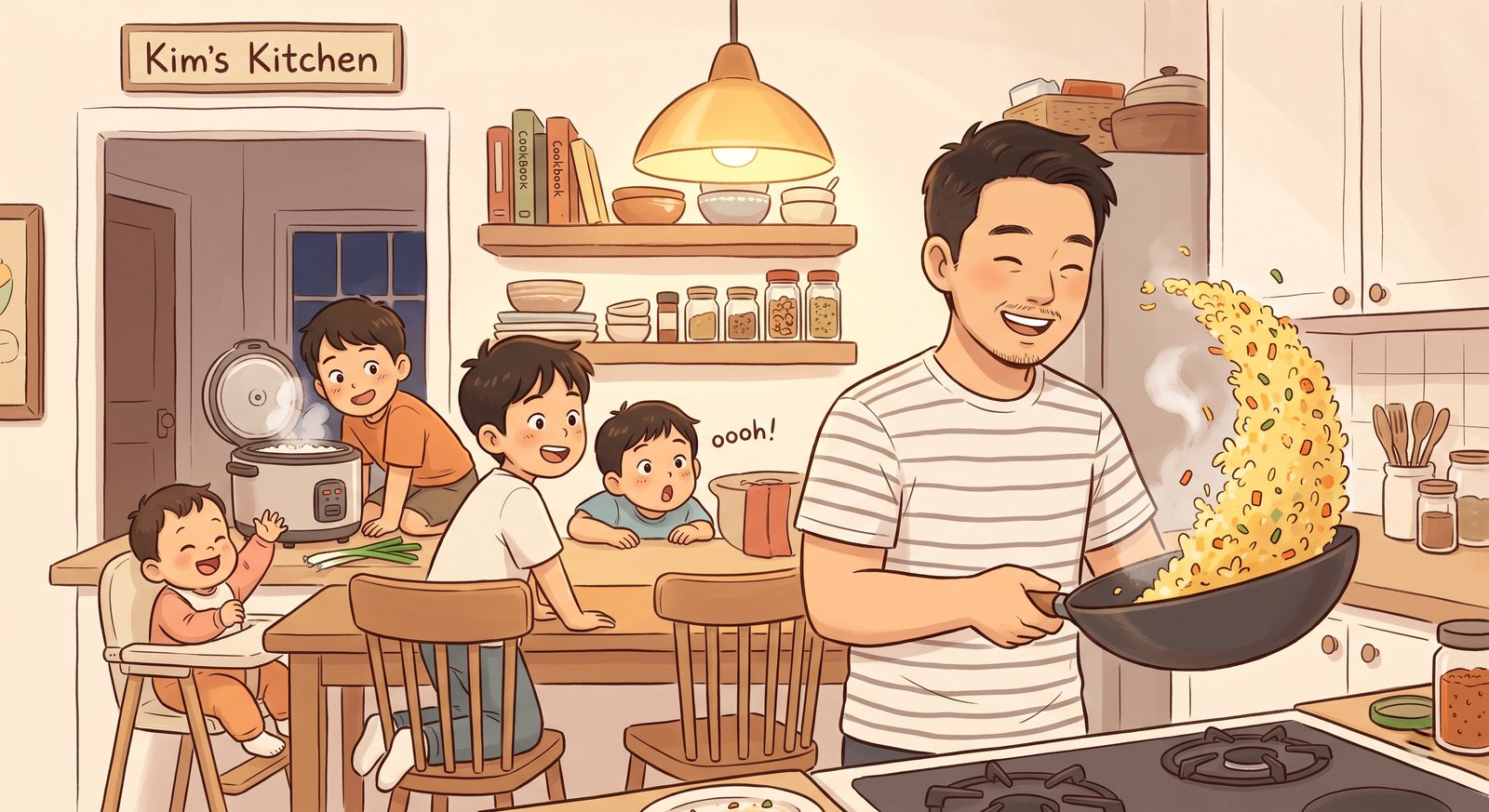
    My first fried rice was when I was 11 years old. It wasn’t great. I’ve been cooking almost every day since then — before I was a teenager, long before I got married, and now every single day for a family of six in Cambodia. Nobody taught me this as a discipline. It just became one, meal by meal, the same way most of what actually works in a house with four boys becomes a system: not because I sat down and designed it, but because I kept doing the thing that worked and quietly dropped the things that didn’t.

    Somewhere in those twenty-some years, I stopped thinking about cooking as a skill I was building and started thinking about it as a system: a small rotation of meals that are fast, that my kids will actually eat without a fight, and that don’t require me to be a better cook than I actually am.

    Today’s theme is eggs, because eggs are the backbone of that system. Cheap, fast, endlessly flexible, and — if you do them right — something four boys under ten will eat without a single complaint. These are the five egg recipes for kids that actually survive contact with a picky table, not the ones that just look good in a photo.

    The System Behind Our Egg Recipes for Kids

    Here’s the part I have to keep re-learning: better, in my standards, is not the same as edible, in my kids’ standards. I’ll get ambitious some nights — want to cook something more interesting, more impressive, more “me” — and it just sits on the plate while a bowl of egg fried rice would’ve disappeared in four minutes flat. Cooking shouldn’t be stressful. If my kids eat it without complaining and it’s a healthy meal, it works. That’s the whole system. It’s not glamorous. It’s just repeatable.

    Our boys live on the first three of these five egg recipes for kids as their default menu. I mix in pasta or pasta soup here and there, but eggs are the routine — the thing I can make with my eyes half open before anyone in the house is properly awake. Here’s all five, exactly how I make them.

    Egg Fried Rice

    This is our kids’ favorite, no contest. The rule that matters most: use day-old, cold leftover rice — never freshly cooked rice. The colder and older it is, the better it fries. Freshly cooked rice is too wet and clumps instead of frying loose.

    Season the rice, then crack in eggs — one egg per person eating. Three kids at the table means three eggs. Mix the eggs straight into the rice before it ever touches the pan; it’ll look like a strange egg porridge at this stage, and that’s correct.

    Get a wok if you have one — it makes a real difference here. High heat, and be generous with the oil, or the eggs will burn onto the pan. Toss in minced garlic (seasoned) and let it start changing color, then dump the whole egg-rice mixture in and start tossing immediately.

    From here you’re committed: you will not have time to season while this is happening, or the rice will clump. You need to be actively tossing for about five minutes straight, until there’s no sticky texture left on the rice. Once it’s dry-tossed like that, turn the heat off, throw in a handful of chopped thin green onions, and toss for one more minute — the residual heat in the pan takes the raw, sharp scent out of the greens without cooking them into mush.

    That’s it. Serve it. If you want, mince some onion in too — mince it small enough that the kids can’t actually see it in the rice. They’ll just see yellow and think it’s eggs. If you don’t see it, you don’t know it’s there.

    Day-old rice isn’t a quirky preference — it’s the actual reason restaurant fried rice fries loose instead of clumping into a sticky mess, since the rice dries out and firms up in the fridge overnight.

    Egg Soup

    This one’s simpler on ingredients, harder on timing. Stir-fry garlic and onion in a pot until they start changing color, then add water and season the broth. A splash of soy sauce gives it depth, and a bit of tuna liquid (참치액, cham-chi-aek) if you have it — it makes a real difference. Let it come to a boil.

    Here’s the part that took me a while to get right: once it’s boiling, turn the heat off. Have your eggs already whisked and ready to go. Once the bubbling settles, stir the soup in one direction to create a whirlpool, and slowly pour the whisked egg in along the side of that whirlpool as it spins. That motion is what gives you those soft, wispy egg ribbons instead of solid clumps.

    And then — don’t stir again. Not once the egg is in. If you stir after pouring, the egg clumps together instead of staying in those delicate strands. Let it sit. That’s the whole trick, and it’s the difference between a good egg soup and a mediocre one.

    Omelets

    This is our standard daily breakfast, and it’s the simplest of the five. I mince whatever vegetables I’m using and keep them in a separate bowl first. Pour whisked eggs into a hot, oiled pan and give it a quick stir to start it cooking evenly. Once there’s a layer set, sprinkle a handful of the minced vegetables over it, then fold it over on itself little by little, working it into an oval, until it closes up.

    That’s it — no fixed recipe for what goes inside, just whatever’s on hand that morning.

    Stir-Fried Eggs and Tomatoes

    This one has its lines — not every kid is on board with it the way they are with the fried rice. It’s a Chinese dish originally, customized a bit to how I like it. It’s also our “older kids” recipe; it took our older boys getting a bit more adventurous with flavor before this one landed for them.

    Slice regular tomatoes and fry them first, pressing them down with the spatula as they cook to release all the juice — you don’t want any liquid left trapped in the tomato pockets. Once most of the moisture has cooked off, add whisked, seasoned eggs, all still on low-medium heat. I add oyster sauce here for flavor, and let the eggs roll around in the tomato juice as they set. The tomato’s sourness cooks off, and what’s left is a sweet flavor from the oyster sauce coating the eggs. End result: something like scrambled eggs folded through mashed tomato, glazed in tomato juice and oyster sauce.

    Egg Soy-Sauce Rice Mix (The One-Minute Cheat Code)

    This is the cheat code, and it’s a Korean thing my whole generation grew up on. In a bowl of hot rice, crack in one raw egg, add two to three tablespoons of soy sauce, and a drizzle of sesame oil. Mix it together. Done.

    This one exists for parents who didn’t have time to actually cook for themselves — but it’s still a favorite among Korean millennials who grew up eating it, myself included. It sounds too simple to be good. Try it anyway. For real.

    Cooking Shouldn’t Be Stressful

    I’ll be honest about the trade-off in all of this: leftover rice as a running household routine wasn’t necessarily the smartest system to build a habit around, and the dishes still pile up after all this frying and tossing — we don’t have a dishwasher here, so that part I still question every time. But the actual cooking part isn’t the stressful part anymore, and that’s the whole point of having a system instead of reinventing dinner every night.

    I still catch myself wanting to cook something more impressive some nights. But my kids will eat egg fried rice without a single complaint, every time, and that’s worth more to me most evenings than being a better cook than I actually am. Twenty years ago that first fried rice was a mess because I was trying to prove something to myself. Now it’s just Tuesday dinner, and that’s exactly the point — a system stops being impressive and starts being useful the moment you stop needing it to say something about you.

    The kids are the easy audience, honestly. My wife is a different story — picky in her own way, sometimes as picky as the boys — and getting her to try anything new has been its own ten-year project. There’s a tomato soup and a batch of homemade baguettes involved in that story. That’s next.


  • Four Boys, Four Wirings: The 7 Child Temperament Types

    Four Boys, Four Wirings: The 7 Child Temperament Types

    I have four sons. Same parents, same house, same dinner table — and four completely different ways of being a boy. Long before I had ever heard the phrase child temperament types, I could see the whole thing playing out at breakfast.

    One of them wants to know the plan. Not because he’s anxious — knowing what comes next is just how his day sits right. One is out exploring, and where he goes, events happen. Not disasters exactly. Events. One is quietly working, all day long, at keeping the peace between everyone else. And the youngest is playing king, ruling the house from two feet off the ground, still too young for anyone to say what his wiring really is.

    For years I ran the same playbook on all four of them. Same tone, same reasoning, same consequences. Then I’d stand there wondering why a sentence that landed perfectly on one son slid straight off the next one like I hadn’t said anything at all. I assumed I was being inconsistent. I assumed I needed to be firmer, or more patient, or better at this.

    What actually changed it wasn’t a parenting trick. It was a fairly boring idea out of developmental psychology, and I only ran into it because I’d run out of my own ideas: temperament. Learning the child temperament types didn’t make me a better dad overnight, but it finally explained what I’d been getting wrong.

    Your kid came pre-wired

    In the 1950s, two researchers named Alexander Thomas and Stella Chess followed 133 children from infancy into adulthood. What they found was that babies show up with their own behavioral style already installed. How hard they react. How they handle a new thing. How much routine they need. How loudly the world’s noise and textures land on them.

    Not personality built by parenting. Wiring, there from the start.

    But the part that actually mattered to me was what they found about the parents. How a kid turned out wasn’t predicted by which temperament he had. It was predicted by the fit between his wiring and how the people around him responded to it. They called it “goodness of fit.” A demanding kid with a well-matched parent often did fine. An easy kid in a house that never quite saw him could quietly struggle.

    Which means the wiring isn’t the verdict. The fit is the part we actually have our hands on.

    So the question I’d been asking — how do I fix this behavior — turned into a better one. What is this kid actually wired like, and what does he need from me because of it?

    Before the list, one thing

    No test is going to define your child. Not this one, not any of them. Twelve questions can’t hold a person, and anything that claims otherwise isn’t worth your evening.

    What a framework like this is actually good for is smaller and more useful than that. It helps you ask better why’s. Why the same bedtime routine settles one son and starts a war with another. Why one of them needs tomorrow read out loud before he can sleep and another one can’t stand hearing it.

    It doesn’t put your kid in a box. It just gives you somewhere to point the flashlight.

    That’s how I’d want you to hold everything below.

    The 7 child temperament types

    The Keeper child type — runs on predictability. Same cup, same seat, same order of things. Sameness isn't stubbornness, it's how this child feels safe. Illustration of a child lighting lanterns along a path to a castle.

    The Keeper runs on predictability. Same cup, same seat, same order to things. That isn’t stubbornness — it’s how he feels safe. This is the son who needs to know what we’re doing tomorrow before he can properly finish today. Countdowns before transitions help. So does telling him about a change before it lands on him, and letting him own his own routines. Grown up, this is the one whose homework is done and whose promises hold.

    The Explorer child type — novelty is the fuel. Approaches everything, lingers on almost nothing, by design not defect. Illustration of a child with a map and backpack on a moonlit hill.

    The Explorer approaches everything and stays with almost nothing, and that’s the design, not a defect. New is fuel. This is my event-causer — ten discoveries an hour and a trail of evidence behind him. Finishing is the hard part. So is sitting still, and waiting. Chunks work better than lectures: five minutes, then you’re free. And when life changes — new school, new city, new country — he’s fine in about a week. If you’re raising kids across borders like we are, that’s not a small thing. The Explorer is usually the first one in the family to make a friend in a language he doesn’t speak yet.

    The Harmonizer child type — the easy one, and the most often overlooked. Adaptable and even-keeled, with quiet needs and subtle upsets. Illustration of a child on a swing beneath a tree with a dove.

    The Harmonizer is the easy one. Adaptable, even, quietly working to keep everyone okay. I’d underline this one twice, because I’m raising one: easy kids get overlooked. Their needs are quiet, their upsets are small, and in a loud house full of brothers they can learn to take up less room. With a Harmonizer the work isn’t managing behavior. It’s making sure somebody actually asks him what he wants, and then waits long enough to hear the answer.

    The Spark child type — feels everything at full volume. Joy enormous, frustration enormous, both arriving in seconds. Illustration of a child leaping over a hill trailing golden stars.

    The Spark feels everything at full volume. Joy enormous, frustration enormous, both arriving in about four seconds. The meltdown isn’t a strategy — it’s an engine bigger than his hands on the wheel. What a Spark needs is for you to be the calmest thing in the room, and to name the feeling before you explain anything. The talking works about ten minutes after the crying, not during.

    The Watcher child type — studies the pool before entering it. Not shy, thorough. Illustration of a child looking through a telescope from a stone tower.

    The Watcher studies the pool before getting in. Every pool, every time. Not shy — thorough. And once he’s in, he’s often the most committed kid there. Don’t push him in. Tell him the plan, get there early, and let the other kids come to him.

    The Negotiator child type — treats every rule as an opening offer. Why is due diligence, not defiance. Illustration of a child on a stack of books making a point to an owl.

    The Negotiator treats every rule as an opening offer. “Why?” isn’t defiance, it’s due diligence — and it’s the same wiring that grows into a teenager nobody can talk into anything. Give the reason once. Offer real choices inside the limits. Then hold the line, kindly.

    The Feeler child type — the world's volume knob turned up. Tags, seams, noise and other people's moods all land twice as hard. Illustration of a child wrapped in a blanket by moonlit water.

    The Feeler has the world turned up too loud. Tags, seams, noise, other people’s moods. What looks like misbehaving is often just flooding. Cut the tag out. Say out loud when you’re leaving and how. Treat the sensitivity as information instead of a problem, and you end up raising the kid who notices someone is sad before anyone else in the room does.

    About the two-year-old

    About my resident king: I didn’t type him, and I’d be suspicious of anything that confidently typed a two-year-old. At that age, big energy and big feelings are the job description. The wiring is still showing up. An honest read says so instead of forcing a label onto it early. Watch him, enjoy him, check back in a season.

    Why a loosely-held name helps

    When my wife and I can say to each other, “he’s not fighting you, he just didn’t get a countdown,” we’re a team for a second instead of two tired people improvising at the end of a long day. That’s the whole value of it. The name isn’t for the kid — he doesn’t need to know he’s a Keeper, and I’d rather he didn’t grow up thinking of himself as a category. It’s for the adults, so we stop taking wiring personally.

    That’s really Thomas and Chess’s entire point about fit. The environment adapts.

    The environment is us.

    The thing I built

    That’s also why I made Little Lantern. It’s a free quiz — three minutes, twelve situational questions about your child, and you land on one of the seven above with one thing to try tonight. It’s illustrated like a bedtime book, because I built it for the parent scrolling at eleven at night after a hard evening. Which is to say I built it for me. No sign-up.

    Take it here → hellolittlelantern.com

    If you’ve got more than one kid, run it for each of them and put the results side by side. That’s usually where the “oh — that’s why” happens.

    It won’t define your kids. It might explain a few of the why’s.

    Tell me which one walks around your house. I read everything.


    Little Lantern is a tool for understanding, not a diagnosis — you know your child better than any quiz does. Based on the Thomas and Chess temperament framework (1977) and the goodness-of-fit model.

  • What Cambodia’s Pace Taught a Recovering Workaholic

    What Cambodia’s Pace Taught a Recovering Workaholic

    I need to say this clearly, because it would be easy to read the last post and assume the ending: we didn’t move to Cambodia to escape my workaholism. That’s not the story, and I don’t want to tell it that way just because it would tie up neater. As a recovering workaholic writing this now, I can see the shape of both truths at once — the calling that actually brought us here, and the workaholic dad who came along for the ride and had to change anyway.

    We moved because we believe God called us here. That’s the plain version. The fuller version starts with Korean church history, of all things — specifically with Horace Grant Underwood, one of the key Western missionaries who came to Korea in the 1880s. Underwood is recorded in Korean history for a reason: his family line didn’t come for one generation and leave. It stayed for four. Four generations of one family, giving their lives to a people that weren’t originally their own.

    That challenged something in how we thought about missions. We’d been thinking of it as a calling for a season, maybe a calling for our lifetime at most. Underwood’s family made us ask a different question: what if it’s a calling across generations — not just something we do, but something our children’s children might still be doing, if the Lord tarries? A calling isn’t just handed to one person and then it’s over when that person is. It can be planted, and it can be inherited, the way it clearly was in the Underwood family for four generations straight.

    We had a real reason to believe Cambodia was where that could start for us. My in-laws had already been serving there for twenty years. The ground was already broken, relationships already built, trust already earned in ways that take decades, not mission trips. We had the heart to build on that as a second generation — not starting from zero, but picking up something already in motion — loving the people of Cambodia the way Christ has loved us. That’s the whole reason. Not a pace we were running from, but a people and a work we felt called toward, generation after generation, the way the Underwood family showed us it could be done.

    So no — workaholism isn’t why we came. But it’s absolutely part of what changed once we got here, because Cambodia does not run on the schedule I brought with me.

    When In Rome

    Korea moves fast. There’s a word for it — 빨리빨리 (ppalli-ppalli), hurry hurry — and it’s usually the first phrase any foreigner learns there, because it’s not just a word, it’s the whole operating rhythm. Ask for a side dish at a Korean restaurant and it’s at your table in under a minute. Everything runs at that speed, all the time, and if you’re walking instead of moving with purpose, people notice.

    Cambodia isn’t that. My ministry here isn’t a typical Korean-church ministry transplanted somewhere hotter — it’s a completely different pace, on purpose, because it has to be. If I show up running at Korea speed, the community I’m actually here to serve can’t catch up, and the whole point of being here is to walk with them, not past them. When in Rome, you move at Rome’s pace. That’s not a compromise. That’s the job.

    I didn’t understand that gap until I was living inside it. One time, our group went out to eat, and the food took over an hour to arrive. In Korea, that kind of wait basically doesn’t happen unless you’re feeding a hundred and fifty people at once. Here, it’s just how long it takes. Another time, I wanted to move on a new project with our local leadership. I brought the idea, ready to plan, ready to move. Their answer was: let’s figure things out. It took a full week just to get everyone in a room to start discussing it.

    If you’d told workaholic-me in Korea that starting a conversation about a project would take a week, I’d have called that a crisis. Here, it’s Tuesday. And if I insist on running my old pace inside a place that doesn’t run that way, I’m not being diligent — I’m just leaving everyone else behind. It’s like showing up to drive with a group of box cars that top out at eighty miles an hour, except I brought a Lamborghini. The pace difference isn’t a minor inconvenience to route around. It’s the thing that separates you from the very people you came to walk alongside — the same patience it takes to actually meet a toddler mid-tantrum instead of rushing him past it.

    What a Recovering Workaholic Had to Learn

    I understand exactly why workaholism happens, because I lived inside the version that made sense. It makes you feel valued. It makes you feel like you’re doing everything right, and in certain environments, you genuinely are — the yeses really are correct, one at a time, the way mine were with the funerals. But the environment matters. Who you’re serving and what that service actually requires changes what faithfulness looks like. In Cambodia, faithfulness required something I wasn’t used to giving: patience with a pace I couldn’t control and, eventually, didn’t need to.

    It took me a while to down-pace myself. That’s the honest word for it — not a dramatic breakthrough, just a slow unclenching. I’m still learning it. But I’d stop short of calling it a fight or a struggle at this point, because that’s not really what it feels like anymore for this recovering workaholic. It feels more like learning to be flexible in ways I genuinely never had to be before, and finding out that flexibility isn’t the threat to faithfulness I used to assume it was. These days, if something is truly urgent, I still move — I’m the one who knows when that’s true, and I trust myself to know it. Everything else gets to wait its turn, the way everything here waits its turn.

    What surprises me most is how much room that’s opened up that has nothing to do with ministry at all. Room for my wife, in ways the Korea schedule never had space for. Room for my kids, not just physically present but actually unhurried with them. Room for fellowship — friends, not just congregation members, just people to sit with and not be needed by. As a recovering workaholic, that’s a strange kind of gain to describe, because none of it shows up on a report of what got accomplished. It’s not a project finished or a sermon delivered. It’s just breathing room, and I didn’t know how much I’d been missing it until I finally had some.

    What I Have Now That I Didn’t Have Before

    Here’s the part that still catches me, even after all this time: the ordinary, unremarkable rhythm of family life that most dads take for granted — I didn’t have that in Korea. Not really. I have it now.

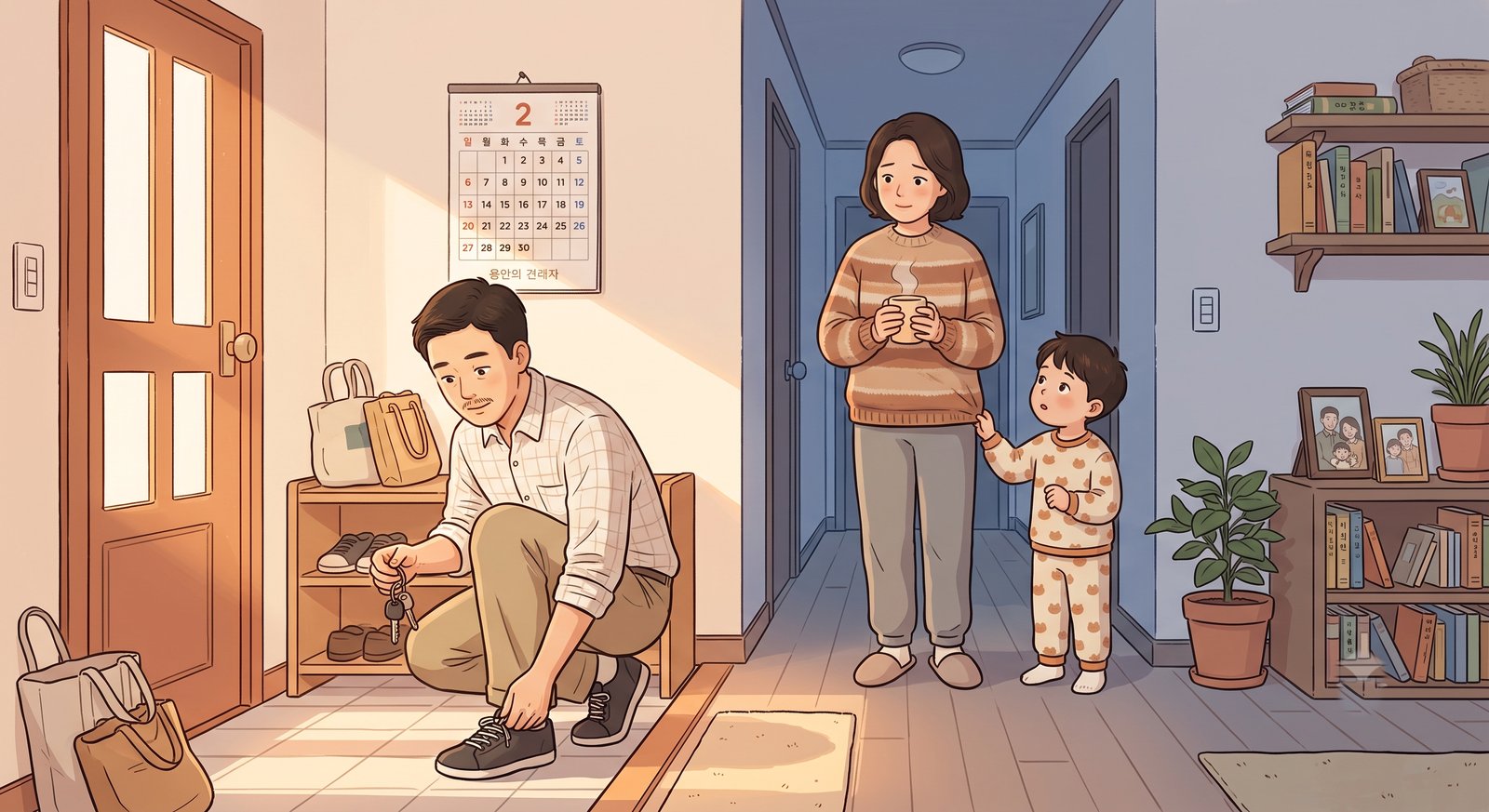
    I drop my boys off at school. I pick them up. I’m home for breakfast, for lunch, for dinner, on an actual regular basis — not as something rare enough to notice, but as just what my days are built around now. That’s not a small thing to me. It’s not something I had the privilege of doing consistently until we came here. That same son who once asked my wife if church was my house is now a boy who watches me walk him into school. I don’t take that for granted, because I remember exactly what the alternative looked like, and I lived inside it for years without fully seeing it.

    Life in Cambodia is physically tiring in its own ways — heat, logistics, distance from things that used to be easy. I’m not going to pretend otherwise. But I love my life here, with my family, serving the Lord at the pace this place actually calls for. If workaholism was ever going to loosen its grip on me, it was never going to happen through willpower alone. It happened because I landed somewhere that simply wouldn’t let me run the old way anymore — and it turned out that was a gift, not a loss.

    If you’re a dad who’s proud of the pace you keep, the way I once was: ask yourself what that pace is actually buying you, and what it might be costing somewhere you’re not looking. You might not need to move across the world to find out. But it might take something just as disruptive to your normal to actually see it.

  • When My Son Asked If Church Was My House

    When My Son Asked If Church Was My House

    There was a stretch in South Korea — about three months — where I didn’t have a single day off. Seven days a week, every week, for three months straight. Looking back now, that’s exactly what a workaholic dad’s schedule looks like, even though at the time it just looked like faithfulness.

    It wasn’t because I couldn’t say no. It was funerals. In our church, that season happened to bring a kind of domino effect among our elderly members — one after another, week after week, and for some reason it kept landing on a Sunday or a Monday. In Korea, a funeral runs three days — 삼일장 (sam-il-jang), we call it — and as a pastor, you’re going back and forth across all three days of it.

    I want to be careful here, because this isn’t a complaint. Sitting with a family in loss is one of the most serious things a pastor does. We believe the person who died is already home — in the arms of Jesus, past needing anything from us. The funeral isn’t for them. It’s for the ones left behind, the ones who need to hear that this isn’t the end of the story, that there’s a reunion coming, that the grief in front of them isn’t the last word. That work matters. I’d do every one of those three-day funerals again, without hesitation, exactly as they happened.

    But a sam-il-jang isn’t a single service. It’s three days you keep returning to — visiting hours, the service itself, the burial — and when they landed back-to-back-to-back, week after week, for a stretch of elderly members that just happened to cluster that way, there was no seam left anywhere in the week for anything else. One family’s three days would barely close before the next family’s three days opened. I wasn’t choosing between funerals and rest. I was choosing between funerals and everything else in my life, over and over, for three months, and every single time the funeral was the obviously correct choice to make. That’s what made it so hard to see as a problem while it was happening.

    But three months without a day off doesn’t just cost you rest. It costs you your family, in ways you don’t notice until someone else says it out loud.

    What Being a Workaholic Dad Actually Looked Like

    I lived three minutes from the church I served. Three minutes — close enough that “going home” and “going to work” barely functioned as different sentences. The older members of the congregation had my number, and when their phone or their computer gave them trouble, they’d call me — not the church office, me. When someone needed help, our pastoral staff were glad to give it; serving them that way was a joy, not a burden. Someone’s printer wouldn’t connect. Someone couldn’t figure out a video call with their son overseas. Small things, technically. But I was three minutes away and I always answered, so I was always the one who went.

    And I went. Every time. On what should have been a day out with my family, I’d get the call and go anyway, because refusing felt like failing the very people I was supposed to be serving. I didn’t miss a single calling, because that’s what I believed being a pastor meant.

    On top of the funerals, there was everything else that doesn’t pause for them: the sermons — four or five a week between morning services, Wednesday worship, and Sunday — the discipleship meetings, the counseling, the lectures, the caring ministry. I did all of it. I prepared for all of it. And for a long time, I told myself I was fine, because I was getting it all done, and getting it all done felt like proof I was doing this right.

    That’s the part about being a workaholic dad nobody warns you about going in. It doesn’t feel like a problem while it’s happening. It feels like faithfulness. It feels like value. And in a church, that feeling gets confirmed from the outside, too — people notice the pastor who never says no, and they say so, and it’s meant as a compliment, and it lands as one. There are environments where showing up for absolutely everything really is the right call, where it’s not a symptom of anything, it’s just faithfulness. Ministry can look exactly like one of those environments from the inside, even in the months it’s quietly costing you something else entirely — the same way staying physically present isn’t the same as being emotionally there with your own kids.

    The Question That Actually Stopped Me

    During that season, my oldest son — he was still young enough to be working out what any of this even meant, still learning who Jesus was and what it meant to be saved — asked my wife a question one morning as I was leaving for church again.

    “Is Dad going to his house?”

    He wasn’t trying to say anything profound. He was just asking a real question, the way kids do when the facts in front of them don’t add up to what they’ve been told. And the facts, from where he was standing, were these: Dad wakes up, dad goes to that building, dad comes home late or not at all, dad sleeps over sometimes. If you were four or five years old watching that pattern, “is Dad going to his house?” is actually the more reasonable question than “dad’s going to work.”

    I wasn’t in the room when he asked it. My wife told me later. And it hit me harder than almost anything else from that season — harder than the exhaustion, harder than the sermon count. Because he wasn’t wrong. Not about the building being my house. About what he’d pieced together from watching me live. I was, functionally, a guy who slept over at his own home sometimes. Church was where I actually lived. Home was where I visited.

    He was still learning what any of this meant — who Jesus was, what salvation even is, all of it still forming in a four-year-old’s mind. So of course his question came out simple. But that’s exactly what made it impossible to argue with. He wasn’t making a theological point or trying to guilt me. He was just reporting what he saw, the way kids do before they’ve learned to soften an observation for the adult it’s about. And what he saw was a pattern clear enough that “is Dad going to his house?” was the more sensible read of it than “dad’s going to work.”

    I don’t think there was a single moment where I decided that was an acceptable trade. It happened the way most workaholism happens — one legitimate yes at a time, each one defensible on its own, until they added up to a life your own son couldn’t quite place you inside of. Nobody sits down one day and chooses to become a stranger in his own house. You just keep saying yes to the next real, serious thing, and one morning your kid asks your wife a two-second question that tells you exactly where you actually live.

    What I Know Now That I Didn’t Then

    I’m not writing this to tell you ministry work is the problem, or that showing up for grieving families was somewhere I went wrong. It wasn’t. The problem was never any single yes. It was that I never asked what all of them, stacked together, were actually costing at home — until a four-year-old asked a simple question that answered it for me.

    That question followed me out of Korea. It’s part of why what happened next — moving our family across the world into a completely different pace of life — ended up meaning more than I expected. Not because we went looking for an escape from any of this. We didn’t; that’s its own story. But once we were there, in a place that simply couldn’t run at the speed I was used to, I found out how much of “full-time pastor” had actually just been a workaholic dad wearing a pastor’s schedule. Workaholism isn’t really measured in hours — it’s the inability to disengage even when nothing’s asking you to stay — which tracks exactly with what those three months were.

    For now, I’ll just say this: if you’re a dad reading this who’s proud of never missing a single call, a single meeting, a single yes — ask the people who live in your house what building they think you live in. You might not like the answer. I didn’t.

    I’m not telling you to say no to the funerals, or the emergency calls, or whatever your version of them is. I said yes to every one of mine and I stand by it. What I’m telling you is that faithfulness to the work and faithfulness to your family were never actually competing for the same hours in my head — I never once did the math that way. I just kept adding up individually correct decisions until they became a wrong life. If there’s one thing worth taking from three months without a day off, it’s that: the problem is rarely any single yes. It’s that nobody’s counting the total but you, and it’s easy to stop counting.

  • When Your Marriage Is Also Your Workplace

    When Your Marriage Is Also Your Workplace

    Most men get a commute. Thirty, forty minutes where the job stays in the car and the house waits at the other end. Somewhere in that drive, you shed one version of yourself and put on another — coworker to husband, employee to dad. It’s not much, but it’s something. A seam.

    Marriage and ministry don’t get that seam when they share a building. I didn’t have one for years. When I was a full-time pastor in South Korea, I was at church eighty to ninety percent of my week. Morning services every day. I was the director of Sunday school, the director of the missions department, and the director of young adults — three titles, one calendar. That meant four to five sermons a week, on top of everything else, plus leading worship on Wednesdays and one of the Sunday services. Most mornings I went straight to my office and sat down to prepare, because there was always another sermon coming whether I was ready or not.

    I won’t say it was easy. I’ll say something closer to the truth: I’m some kind of workaholic. When I’m working, I’m zoned in — all the way in — and that’s exactly what came between me and my marriage. Not the ministry itself. Me, inside it.

    No Separation of Spheres

    Most marriage advice quietly assumes two different worlds — a work world and a home world — and tries to help you manage the border between them. Decompress on the drive home. Leave work stress at the office. Protect date night from your phone.

    None of that works when marriage and ministry are the same address. When the church is your calling and your job at once, there’s no “how was your day,” because church already knew how your day was. There’s no neutral ground to retreat to, because the sermon you’re still writing follows you home in your head. There’s no decompression, because decompressing would mean stepping outside something you never really left.

    It’s not easy to fully throw yourself into ministry when you have a family. But marriage was never meant to be easy, either. So I did what I could with what I had: if I had ten free minutes, I’d go home for a coffee break with my wife. On days off, we’d plan something — the amusement park, a walk through the mall, a kids’ cafe where our boys could run themselves out. Small, deliberate proof that they mattered as much as the congregation did. Because the truth is, without my wife and my kids, I don’t think I could have loved that congregation the way I did. They weren’t competing with the ministry. They were what made me capable of it.

    Why “Keep Her Happy” Gets More Dangerous Here

    Here’s where I’ll push back a little on how this series started. Part 1 argued that happy wife, happy life gets it backwards — that chasing her mood quietly turns you into staff. I agree with that. But I’d add a layer to it, because I’ve lived on both sides of this phrase.

    I actually think happy wife, happy life is true. I just think most men have the order wrong. If she’s happy, she’ll be supportive of nearly everything you do — but only because what you’re doing was already agreed on between you. The happiness isn’t the input. It’s what agreement looks like from the outside. Chase the happiness directly and you’re managing a mood. Chase the agreement — the actual common ground — and the happiness tends to follow it home.

    That distinction matters more, not less, when marriage and ministry share the same calling. My wife knew exactly what she’d signed up for, and she was supportive. If she’d complained every week, I don’t know that I could have put my whole heart into that pulpit. But her support wasn’t me managing her feelings — it was both of us having already agreed on what this life was going to cost, before it cost it.

    Where it gets dangerous is in the disagreements that don’t look like disagreements about the ministry, but are. Looking back, most of the friction between my wife and me during those years wasn’t really about anything. It was her — or our whole family — crying out for my attention, my care, some proof that I saw them. But when you’re stressed, overworked, half-burnt out, it’s genuinely hard to hear the meaning underneath the words. You just hear the complaint. It’s easier for me now, ten years in, to look past what’s actually being said and just give her a hug — because in truth, that’s usually all she wanted in the first place. I wasn’t always able to do that. I’m not sure I’m always able to do it now.

    The Inherited-Ministry Pressure

    Some of you didn’t just choose a shared calling — you married into one. The ministry, the mission, the whole shape of the work was built by someone else before you arrived, and your marriage now lives inside walls you didn’t design. You didn’t choose the structure. You inherited it.

    That’s a real weight, and it’s different from ordinary in-law tension — it’s not just “we see her family at Christmas,” it’s “the thing we do every day was somebody else’s before it was ours.” I’m not going to pretend that’s a small adjustment. If that’s your situation, you already know the specific shape of it better than I can describe here.

    What Has Actually Worked

    I’ll be honest about something I still consider a gap: I don’t really have an outside voice. I’ve heard other men in ministry talk about someone they trust enough to say everything to — no filter, no performance. I’ve wanted that. I’ve never quite managed it. It’s hard for me to hand my inside over to anyone besides my wife. Everyone else gets a need-to-know version of me, and we get along fine on those terms.

    For a long time I treated that as a weakness I hadn’t gotten around to fixing. Lately I’ve come to see it differently: my wife is the outside voice. Not a substitute for one — the actual one. If I can’t be transparent with the person I chose to marry, I don’t know what good it would do to be transparent with someone I didn’t. That’s not an excuse to skip finding a mentor or a friend who can see both your marriage and your ministry — I still think that’s wise, and I’d tell you to go find one before you’re ten years in like I am. But it means the floor under everything else has to be total honesty with her, or none of the rest holds.

    Two other things that have actually mattered, past the theory:

    You are not the same person you were before you married. Neither is she. You grew up with different families, different defaults, different unspoken rules about what matters — no matter how alike you think you are on the surface. Getting married doesn’t erase any of that, but it should end its authority. You bring what you bring, she brings what she brings, and neither of you gets to let your old values quietly outrank the other’s. That’s what makes a team instead of two people negotiating a truce.

    And the first ten years — I’m ten years in as I write this — are mostly just that negotiation. New value contracts. New priority contracts. Figuring out, argument by argument, what this specific family is actually going to run on. I’m not writing this because I’ve finished. I’m writing it because I haven’t, and the process itself — messy as it’s been — is what’s teaching me how to lead this family, not just manage it. It’s the same process I’m still working through in how I want my own sons to understand calling and service — you don’t arrive at it, you just keep walking toward it, out loud, together.

    Close

    Part 1 ended with a reframe: her happiness was never really the goal. Being known was. A wife who feels known survives a bad week. A wife who’s only being kept happy doesn’t.

    I’d add this: you’re going to fight. You’re going to argue. You’re probably going to blow it once or twice, more than once or twice. That’s not the failure state — the failure state is deciding that because you don’t understand her in the moment, you stop trying to. There’s a real difference between not understanding someone and starting to resent them for it. Stay on the right side of that line and there’s ground for peace on the other side of almost anything. That’s what survives marriage and ministry sharing one address with no off-ramp. Everything else is just peacekeeping with better vocabulary.

  • “Happy Wife, Happy Life” Is Half a Sentence

    “Happy Wife, Happy Life” Is Half a Sentence

    Every man I know has heard the phrase happy wife, happy life. Almost none of us were told what it actually costs.

    Last week my wife and I disagreed about something — I don’t even remember what anymore, which tells you something on its own. And I did what I’ve done more times than I’d like to admit: I agreed with her. Out loud, anyway. Inside, I still thought I was right. I said the thing that would end the conversation instead of the thing I actually believed, because ending the conversation felt like winning.

    It bought me maybe four hours of quiet. Then the actual disagreement — the one I’d just pretended didn’t exist — was still sitting there, except now it was mine alone to carry, since I’d already told her it wasn’t a problem. That’s the part nobody mentions about happy wife, happy life. It doesn’t feel like peace when you do it. It feels hollow, because you didn’t resolve anything. You just delayed it and called the delay a win.

    I’d guess most of the men reading this have done some version of what I did. Buy the gift. Go along with whatever she wants to do for the extra day off. Say “sure, that’s fine” when it isn’t. It’s a good temporary plan. It is not a smart one, and it is definitely not a healthy one — because if you’re honest about who that peace is actually for, it’s not for your marriage. It’s for you. It’s a genuinely selfish move dressed up as a generous one, and the fact that it looks generous from the outside is exactly what makes it easy to keep doing.

    Where “Happy Wife, Happy Life” Comes From — and Why It Sticks

    Before I take this phrase apart, it deserves something like fair treatment, because it isn’t wrong. It’s just incomplete. A wife who feels unseen, unheard, or constantly deprioritized makes for a heavy house — nobody disputes that, and any man who’s lived in that kind of house for more than a season knows exactly how heavy it gets. Silence at dinner. Politeness that’s really distance wearing a nicer outfit. The phrase survives because it’s pointing at something real, and it’s survived for generations because enough men have watched what happens when they ignore it.

    The problem was never the diagnosis. The problem is the prescription — “keep her happy” tells you to treat the symptom and skip the disease. It’s advice that works exactly long enough to convince you it worked.

    The Three Ways It Fails You

    Peacekeeping isn’t peacemaking. Peacekeeping is what I did last week — managing her mood in the moment so the air in the room feels okay again. Peacemaking is actually resolving whatever’s sitting underneath the disagreement. From the outside, in the first ten minutes, they can look identical. Give it a week and the difference becomes obvious: one of them fixed something. The other just postponed it and hoped you’d both quietly forget it happened. Psychologists have a name for the pattern underneath this — conflict avoidance — and it costs a marriage the same way it costs anything else you keep avoiding instead of fixing.

    It makes her responsible for your obedience. If keeping her happy becomes your actual job description, then her bad day quietly becomes your failure report. You start measuring your worth as a husband by her mood on a given Tuesday — which means you start, without ever quite admitting it, resenting her for having feelings she’s entirely entitled to have. That’s not a marriage. That’s a performance review with a ring on it, and nobody signed up to be graded that way, including her.

    It slowly removes you from the marriage. A man whose only functional role is mood-management eventually stops bringing opinions to the table. Stops bringing convictions. Stops leading, because leading occasionally requires saying something she doesn’t want to hear in the moment, and he’s traded that away for quiet. He becomes staff. Good staff, maybe — attentive, accommodating, always reading the room. But staff. And no wife actually wants to be married to her own employee, even if she can’t always articulate why the marriage feels thin.

    The three compound each other, which is what makes the phrase so hard to spot in the moment. You start by keeping the peace instead of making it. That makes her feelings your responsibility to manage rather than hers to have. And managing someone’s feelings for long enough is, functionally, a job — so you slowly turn into the guy doing it. None of it looks like a mistake from the inside. It looks like love, right up until it doesn’t.

    Where I’ve Actually Seen This in My Own Marriage

    I’ve caught myself running this exact pattern more times than the story above suggests. It’s not a one-time lapse for me — it’s a default setting I have to actively catch and override, over and over. Buying something instead of having the harder conversation about what’s actually bothering me. Saying yes to a plan I don’t want because saying no feels like starting a fight I don’t have the energy for that day. Smoothing things over with a gift when what was actually needed was for me to just say the true thing out loud.

    Every one of those moments felt like peace for about as long as it took to walk out of the room. None of them were. And the cost wasn’t even mine to pay alone — my wife could tell, every time, that something had been swallowed instead of said. She just didn’t always know what, which meant she was left carrying a vague sense that something was off, with no actual conversation to point to and no way to fix a problem I’d told her didn’t exist. I’d essentially made my own discomfort her mystery to solve. That’s not generosity. It’s outsourcing.

    The embarrassing part is how long it took me to notice the pattern had a shape at all. For years I just experienced each instance as its own small, isolated decision — this gift, this yes, this swallowed opinion — without ever stepping back far enough to see that they were all the same decision, made on repeat, with the same math underneath it every time: my short-term comfort, purchased with her long-term clarity about where I actually stood.

    What Happy Wife, Happy Life Should Actually Say

    Here’s the version I’ve landed on, and it took a genuinely different kind of decision to get there — not a bigger performance of agreeableness, but an actual conversation neither of us wanted to have at first. For a few years, my wife and I both tried to manage our finances together — every account, every number, both of us looking at it regularly. It didn’t work, and eventually we both admitted that out loud instead of quietly pretending it did.

    My wife gets anxious around money. Not careless — anxious. She doesn’t want the number in front of her. What she actually wants is to be able to ask “can we get coffee this week?” and trust the answer without having to do the math herself. So we changed it. I handle the finances alone now. I control what we spend in a given week, and she doesn’t carry the number in her head at all. She’s not stressed by figures she never has to look at. I’m not stressed wondering whether we’re actually on the same page, because we already had the conversation that put us there — the uncomfortable one, not the easy one.

    Getting there wasn’t as clean as that makes it sound. We fought about it more than once before we landed on something that actually worked. Part of the problem was mine, not hers: it’s hard for me to say no to someone I love, and if she could see everything sitting in one account, I knew there’d be moments I’d struggle to hold the line when she asked for something we couldn’t really afford that week. So we built a structure instead of leaning on my willpower. She still has full access to our joint account — nothing’s hidden from her, and she can check the total whenever she wants. But I only keep a set weekly amount sitting in that account at any given time; everything else moves to a separate account she doesn’t check day to day. She’s not shut out of the number. She’s just not staring at a total big enough to make every request feel negotiable, and neither am I.

    That arrangement makes her happy. But the happiness was never the thing we were managing for — it’s what fell out the other side of actually knowing her well enough to build something around what she needed, instead of just avoiding whatever she might not like in the moment. That’s the entire difference. A wife who feels known makes for a life worth living. Known survives a bad week. Happy, chased directly and on its own, doesn’t survive much of anything, because it was never sturdy enough to hold real weight in the first place. Happy wife, happy life is true — most of us just have the order backwards.

    If you’re figuring out how to get your family running on shared systems instead of one person’s willpower, the same principle scales down to the kids, too — decide it together first, then let the calm follow.

    Where This Goes Next

    There’s a version of this problem that gets a lot harder, and almost nobody writes about it: what happens when your marriage and your calling share the same building — when there’s no commute, no door between the two roles, and the woman you’re supposed to know is also the person you work beside every single day, in the same rooms, on the same clock. That’s Thursday.